8 Ft Deer Fence Guide: Materials & Pro Installation

Planning Your Investment: Materials, Layout, and an 8 Ft Deer Fence
Protecting your property, crops, or livestock from deer requires a serious solution. A well-planned 8 ft deer fence High-Security Game Fence is more than a barrier; it's an investment in security and peace of mind. Getting the setup right from the start ensures your fence will stand strong for decades, especially in the demanding climate of the Southeast.
Why 8 Feet is the Gold Standard for Deer & Game Fencing
While shorter fences may deter some animals, an eight-foot height is the recognized industry standard for effectively excluding white-tailed deer. A mature deer can easily clear a six-foot obstacle (6 ft fence insights). An 8 deer fence provides the necessary height to prevent jumping, securing your high-value crops, orchards, and exotic game.
This height is not just for prevention; it is also a key factor in biosecurity and disease management, such as Chronic Wasting Disease (CWD). Our professional installations ensure your property is protected with a reliable deer exclusion fence that meets both practical and regulatory needs.
Choosing the Right Materials: The Case for High-Tensile Fixed Knot Fence
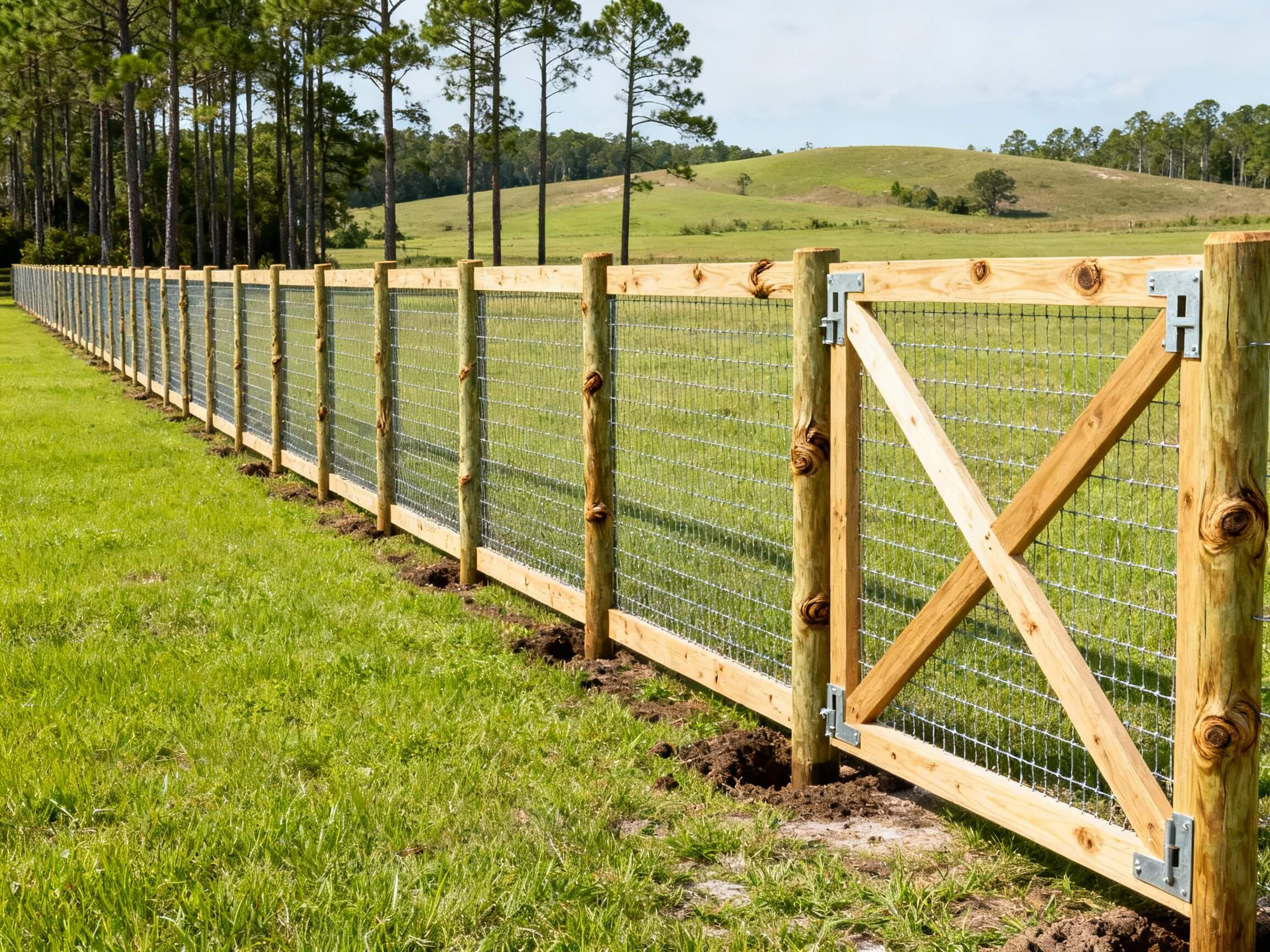
For landowners in the Florida Panhandle and across the Southeast, material choice is critical. The high humidity and frequent rainfall demand a fence that resists rust and corrosion. A fixed knot deer fence fixed knot details made from high-tensile wire with a Class 3 galvanized coating is the superior choice.
This material offers rust resistance two to three times longer than standard wire. Its locked-knot design prevents sagging and holds its shape under pressure from animals. With a documented service life of 20 to 40 years Deer Busters, it provides unmatched durability and long-term value compared to plastic or low-carbon wire alternatives.
Mapping Your Fence Line: Site Prep and Layout Essentials
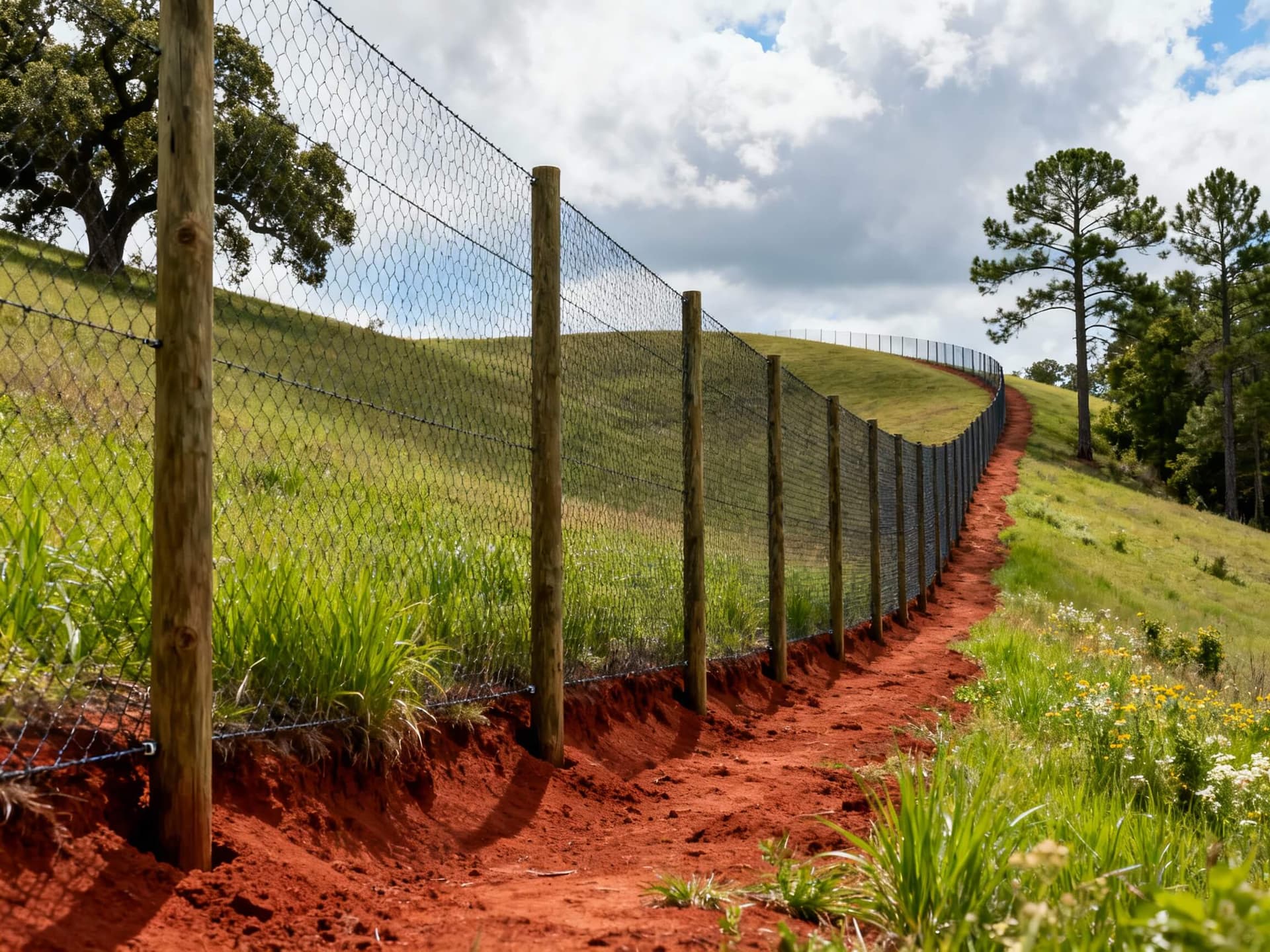
A successful deer fence setup begins with careful planning. Start by walking your proposed fence line and clearing a path at least a few feet wide of any brush, trees, or debris. This clear path is essential for installation and future maintenance.
Next, mark the locations for your posts. For high-tensile systems, posts can be spaced 20 to 30 feet apart, reducing material costs and labor. Pay special attention to corners, ends, and gate locations, as these are the anchor points that give your fence its strength.
A Step-by-Step Guide to a Professional Deer Fence Setup
Installing an 8 ft deer fence is a technical process that requires precision and the right equipment. The strength of the entire system depends on a solid foundation and proper tensioning, ensuring it can withstand the elements and protect your assets for years to come.
The Foundation: Installing H-Braces and Corner Posts
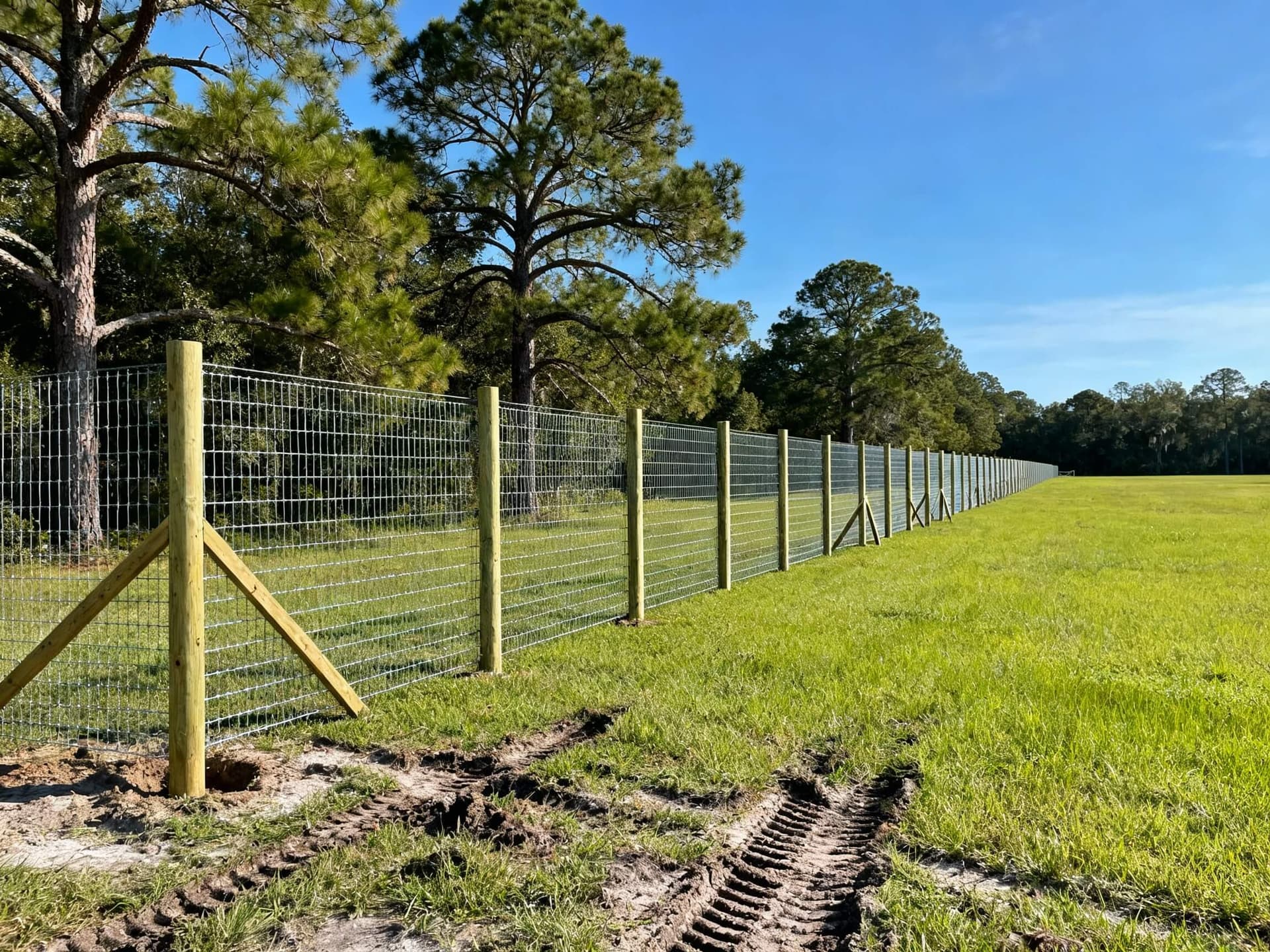
The most critical component of any high-tensile fence is the brace assembly. H-braces, installed at every corner, end, and gate, bear the immense tension of the wire. For a fence in our region, we drive corner posts to a minimum depth of 42 inches to create an unshakeable anchor.
Building strong H-braces is a hallmark of a professional installation. This step cannot be rushed or compromised, as a failed brace will cause the entire fence line to sag and lose its effectiveness. It's the core of a fence built to last.
Setting Line Posts for a Lasting Fence in the South Georgia Landscape
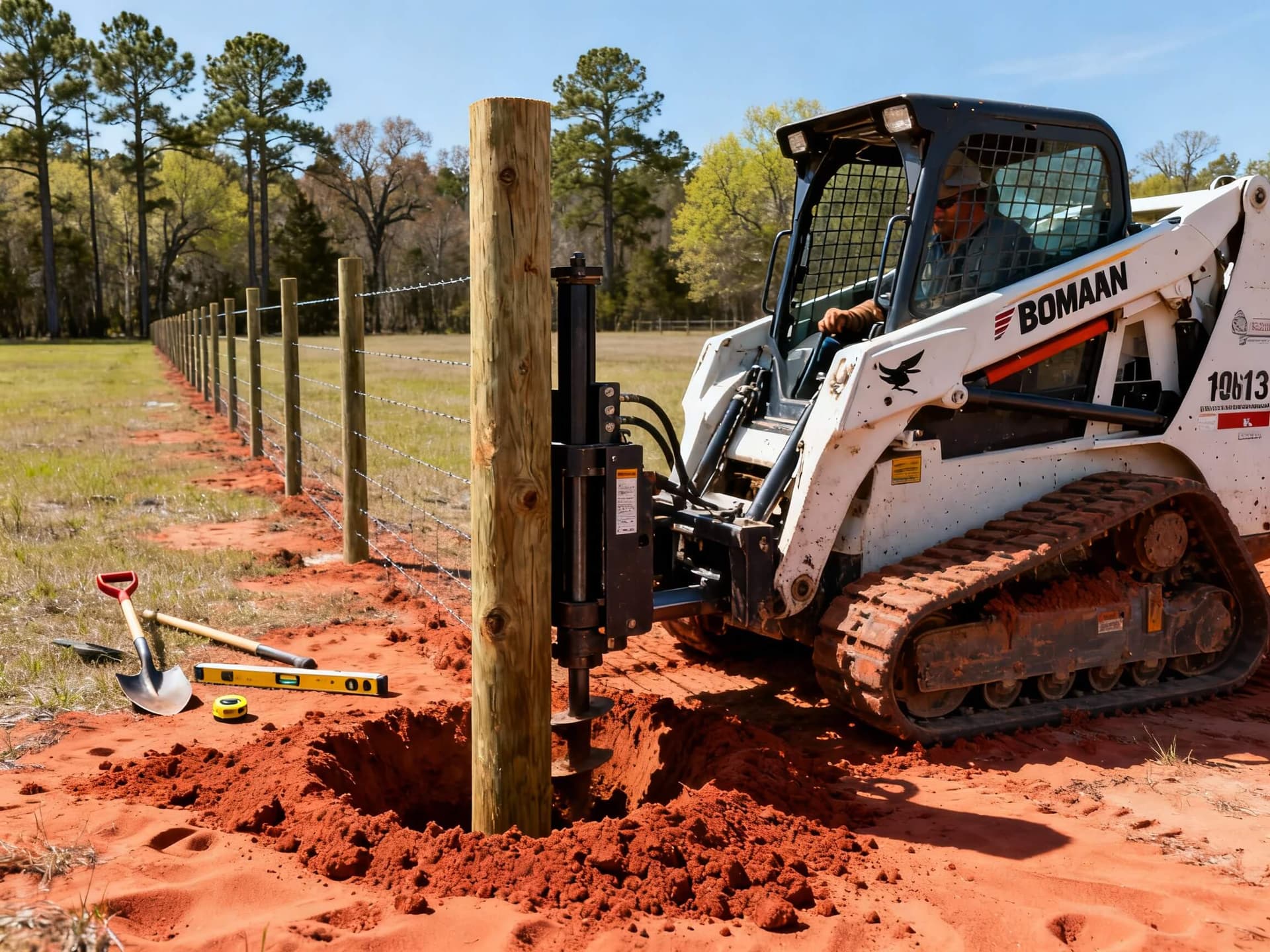
After the braces are set, it’s time to install the line posts. In the sandy and clay soils common to South Georgia, using a hydraulic post driver is essential. This equipment drives posts to a consistent depth of 2.5 to 3 feet, creating a solid and uniform fence line that won't shift or lean.
Manually setting posts in this type of soil is difficult and often leads to inconsistent results. Our professional method ensures every post is secure, providing the stable structure needed to support a high-tensile fence system over rolling terrain.
Stretching and Securing Your Livestock Fence Rolls
With posts in place, the wire can be unrolled and stretched. Using tools like come-alongs and tension gauges, we apply 150 to 200 pounds of tension to the livestock fence rolls. This is less tension than barbed wire requires, but the elasticity of high-tensile wire makes it incredibly strong.
To manage seasonal expansion and contraction from temperature changes, we install in-line strainers. These devices allow for easy adjustments to maintain perfect tension year-round, ensuring your fence remains taut and effective without putting undue stress on your braces.
DIY vs. Professional Installation: A Reality Check for Property Owners
Need Help?
Get expert fencing advice and free quotes. Our team is ready to help with your project.
Available Mon-Fri, 8am-6pm EST
Tackling an 8 ft deer fence project yourself can seem like a way to save money. However, it’s important to understand the true costs, risks, and labor involved before you begin.
The Hidden Costs and Risks of a DIY Setup
A proper deer fence setup requires specialized equipment that most landowners don't own, such as hydraulic post drivers, wire stretchers, and tension gauges. The rental costs can add up quickly. More importantly, improper installation—especially weak braces or incorrect wire tension—can lead to fence failure.
A single mistake can compromise the entire structure, resulting in costly repairs and a fence that doesn't do its job. A typical 200-foot section can take an inexperienced person 35 hours or more to install HomeAdvisor, a significant commitment of time and physical labor.
The Long-Term Value of Expert Installation
Hiring a professional is an investment in quality and longevity. An expert installer has the right tools and deep experience to complete the job efficiently and correctly. We build every 8 deer fence right the first time, giving you peace of mind that your property is secure.
With our specialized knowledge of agricultural fencing, we can navigate tricky terrain and soil conditions to deliver a durable fence that will last for decades. This expertise saves you time, prevents costly mistakes, and ensures you get the maximum return on your investment.
Navigating Local Regulations in the Florida Panhandle
Fence regulations can vary significantly between counties and cities. For example, unincorporated agricultural properties in Santa Rosa County, FL, have different rules than properties within city limits. A professional installer who serves the region understands these local nuances.
We handle the details to ensure your project complies with all local codes in the Florida Panhandle, South Alabama, and Georgia. This removes the burden of navigating complex permits and regulations, allowing your project to move forward smoothly.
Frequently Asked Questions About 8 Ft Deer Fences
How much does installing an 8 ft deer fence in Florida typically cost?
The cost of an 8 ft deer fence installation varies based on terrain, site access, and total length. Generally, you can expect installed pricing to range from $6 to $10 per linear foot for labor, with material costs for high-quality fixed knot wire around $10 to $15 per linear foot. A full consultation provides the most accurate estimate for your specific property.
Is an 8-foot fence actually high enough to keep out white-tailed deer?
Yes, an 8-foot height is the proven standard for deer exclusion. While a motivated deer might attempt to clear it, an 8-foot barrier is overwhelmingly effective at preventing them from jumping. It is the recommended height by wildlife experts and agricultural professionals for reliable protection.
What are the high-fence regulations for properties in South Alabama and Georgia?
Regulations differ significantly. South Alabama is one of the most permissive states, allowing high-fence enclosures for game management without property size restrictions. In Georgia, high-fencing for deer is generally restricted to properties of 640 acres or more, with smaller properties requiring special permits for exhibition purposes only SS Game Fence. We can help you understand the rules that apply to your land.
Protect Your Property With a Fence Built to Last
A successful 8 ft deer fence installation is about more than just putting up a barrier. It relies on using superior materials like high-tensile fixed knot wire, building a solid foundation with deep-set H-braces, and applying professional techniques that are tailored to our region's unique soil and climate.
While a DIY approach is tempting, a professionally installed fence guarantees a secure, durable, and effective solution that will protect your agricultural assets for decades. It is an investment in the safety and productivity of your farm or ranch.
Ready to protect your property with a fence that lasts? Contact Bomann Fencing today for an expert consultation on your farm or ranch in the Florida Panhandle, South Alabama, or South Georgia. High-Security Game Fence
Share this article
Related Posts
Need Help?
Get expert fencing advice and free quotes. Our team is ready to help with your project.
Available Mon-Fri, 8am-6pm EST
Related Posts
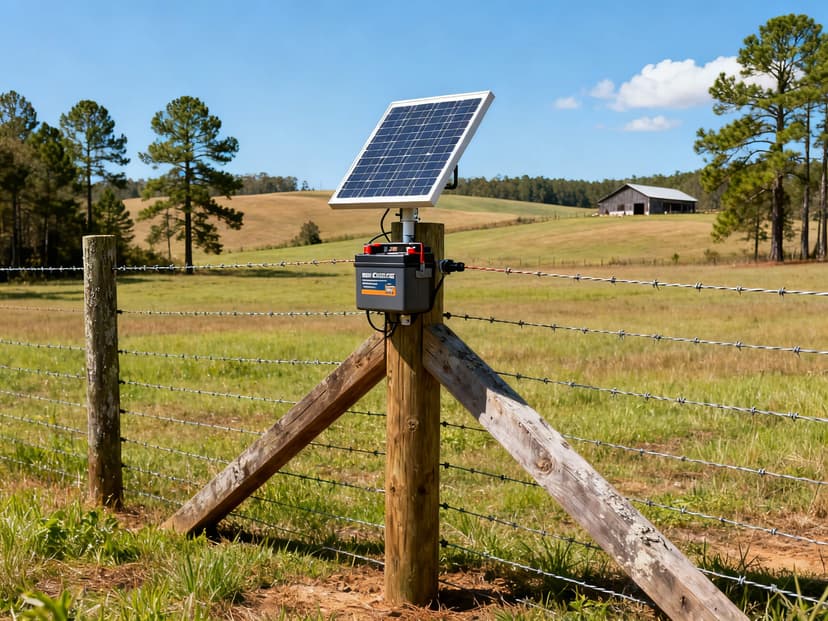
Solar Electric Fence Energizer: Cost vs. Long-Term Value
The Financial Breakdown: Upfront Investment vs. Lifetime Value Choosing the right energizer starts with understanding th...

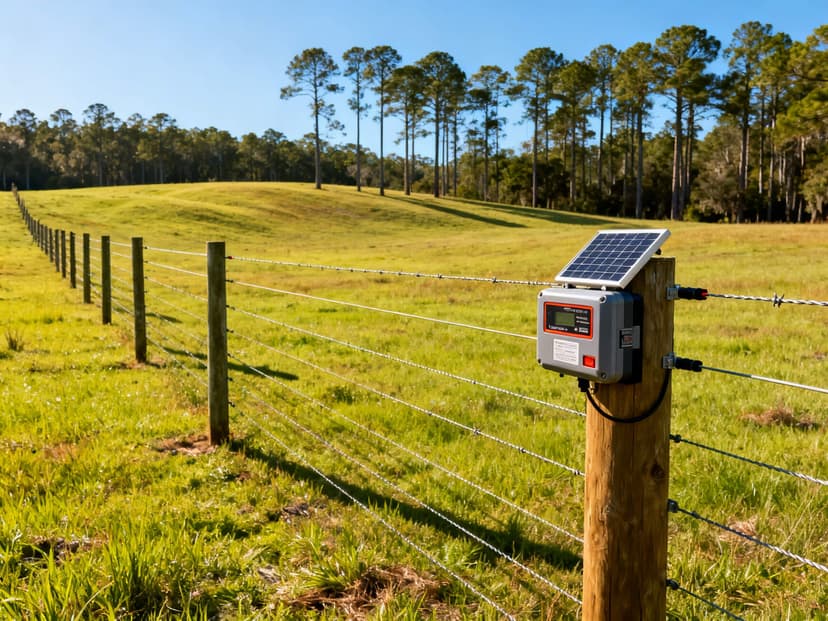
How to Choose the Best Electric Fence Charger for Cattle
Matching Energizer Power to Your Cattle & Fence Your electric fence is a psychological barrier, not a physical one. To b...
Wood Farm Fence: Pine vs. Cedar for Your Southeast Farm
The Main Contenders: A Look at Two Popular Fencing Woods When you're building a fence to protect your livestock and defi...
Farm Driveway Gate: A Guide to Planning & Automation
Key Planning Decisions for Your Farm Entrance Gates Manually opening and closing a heavy farm gate wastes valuable time ...
Custom Farm Gates: A Farmer’s Design & Planning Guide
A Farmer’s Guide to Designing and Planning Custom Farm Gates Choosing the right custom farm gate is a major decision for...