Custom Farm Gates: A Farmer’s Design & Planning Guide

A Farmer’s Guide to Designing and Planning Custom Farm Gates
Choosing the right custom farm gate is a major decision for your property. It’s the first thing visitors see and a critical part of your farm's security and daily operations. For landowners in the Florida Panhandle, South Alabama, and South Georgia, a successful gate requires balancing style with materials tough enough to handle our unique climate.
This guide will walk you through the key steps, from initial design concepts to planning a flawless installation that lasts for decades.
Step 1: Envisioning Your Farm Gate Design
Modern farm gates have moved beyond simple, functional barriers. Today, they are a statement piece that enhances your property's value and reflects your personal style. Planning your farm gate design is the first step toward creating an entrance that is both beautiful and practical.
Blending Style with Function
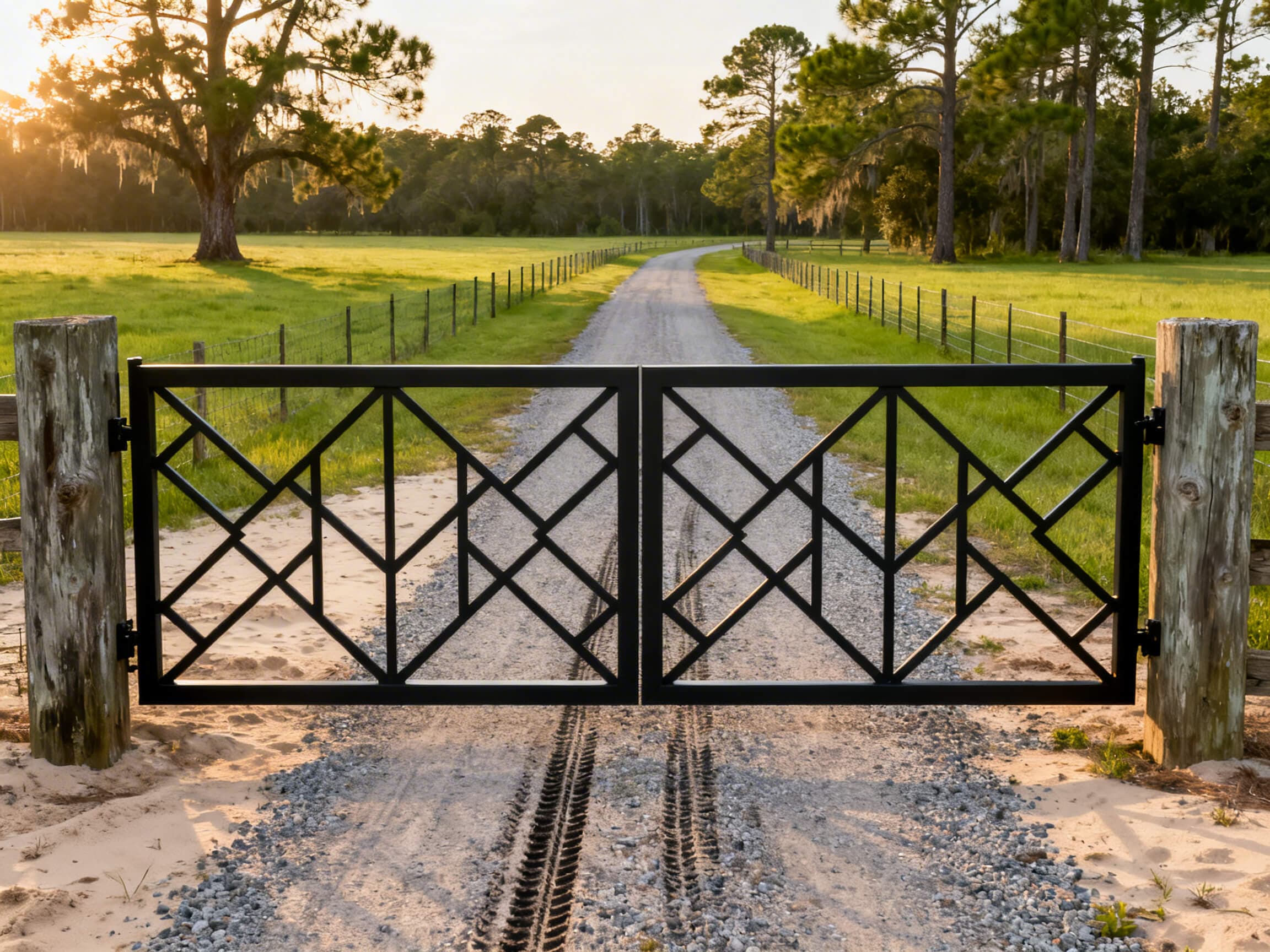
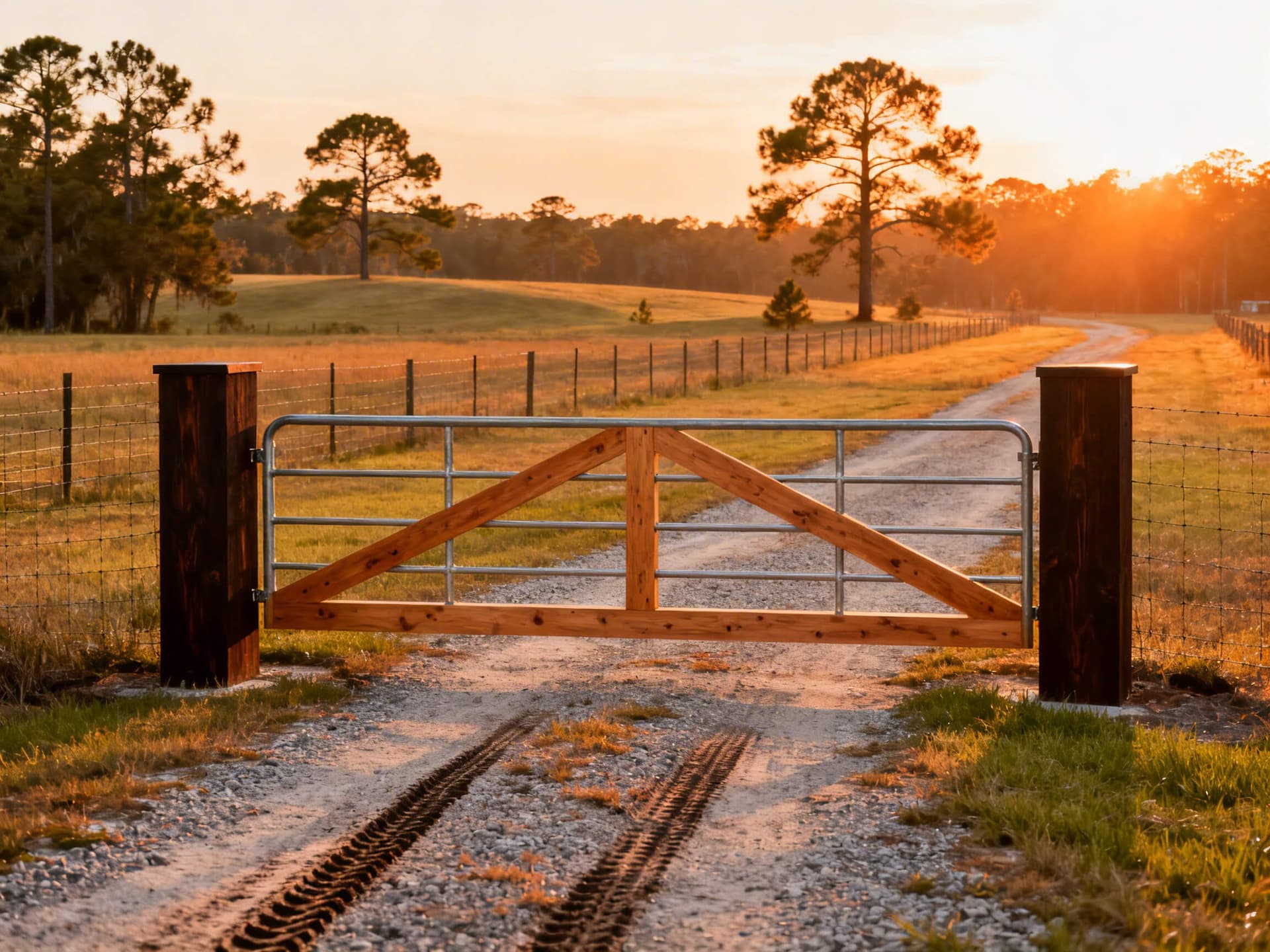
The latest trend in farm gate design is "functional elegance." This approach combines rugged materials like steel or aluminum with the natural warmth of wood accents. The result is a gate that feels both secure and welcoming, perfectly matching the modern farmhouse aesthetic popular across the region.
Making It Your Own with Personalized Details
One of the best parts of ordering a custom gate is the ability to make it uniquely yours. Many farm owners are choosing to create personalized farm gates that feature their family name, ranch brand, or a custom logo. These details, whether crafted from intricate metalwork or routed into a wooden sign, turn your gate into a landmark.
Choosing a Gate Type
Your property's layout will help determine the best type of gate. Traditional swing gates are a classic choice, but they require significant clearance to open. If your driveway is short or sloped, a sliding gate is an excellent, space-saving alternative that works smoothly along the fenceline.
Step 2: Choosing Materials Built for the Southeast Climate
Our region's high humidity, intense sun, and salty air can be brutal on exterior materials. Selecting the right material is the most important factor in ensuring your gate looks great and avoids constant repairs.
The Pros and Cons of Wooden Farm Gates
The look of wooden farm gates is timeless and beautiful. Woods like pressure-treated pine or cedar offer a classic, rustic appeal. However, wood requires significant upkeep in our humid climate, demanding regular sealing or painting to protect it from moisture, rot, and termites.
The Durability of Steel and Wrought Iron
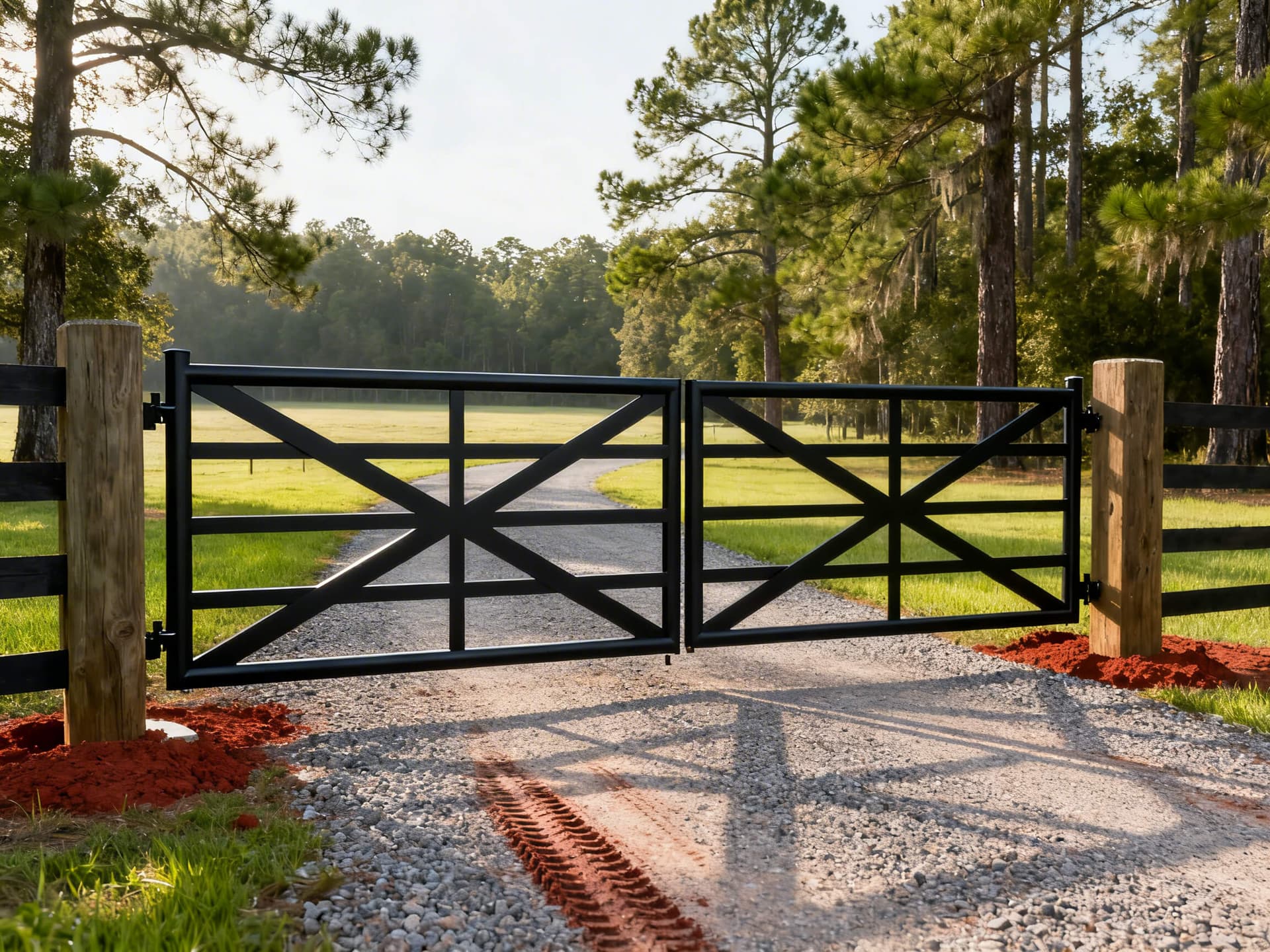
Steel and wrought iron are traditional, strong, and highly secure options. Their main weakness is a susceptibility to rust, a major concern in high-humidity areas from the Panhandle coast to inland South Alabama. To combat this, quality gates should be hot-dip galvanized and professionally painted, with touch-ups recommended every 5-7 years to maintain the protective barrier.
The Low-Maintenance Advantage of Aluminum
For a truly "set it and forget it" solution, aluminum is an outstanding choice. It is naturally rust-proof, making it perfect for coastal properties and anyone wanting to avoid a demanding maintenance schedule. It is also lightweight yet strong, especially when using a superior alloy like 6061-T6 Gate Crafters, 2025, and is ideal for creating sleek, modern geometric designs.
Step 3: Planning for a Flawless and Lasting Installation
A beautiful gate is only as good as its installation. Proper planning ensures your investment is secure, functional, and built to withstand the specific environmental challenges of our area.
Budgeting for Your Custom Gate
Costs can vary widely based on your choices. A standard, pre-fabricated metal gate from a supplier might only cost a few hundred dollars. However, custom farm gates are a different category, typically ranging from $2,000 to over $10,000 depending on size, material, design complexity, and automation.
Overcoming Sandy Soil in the Florida Panhandle
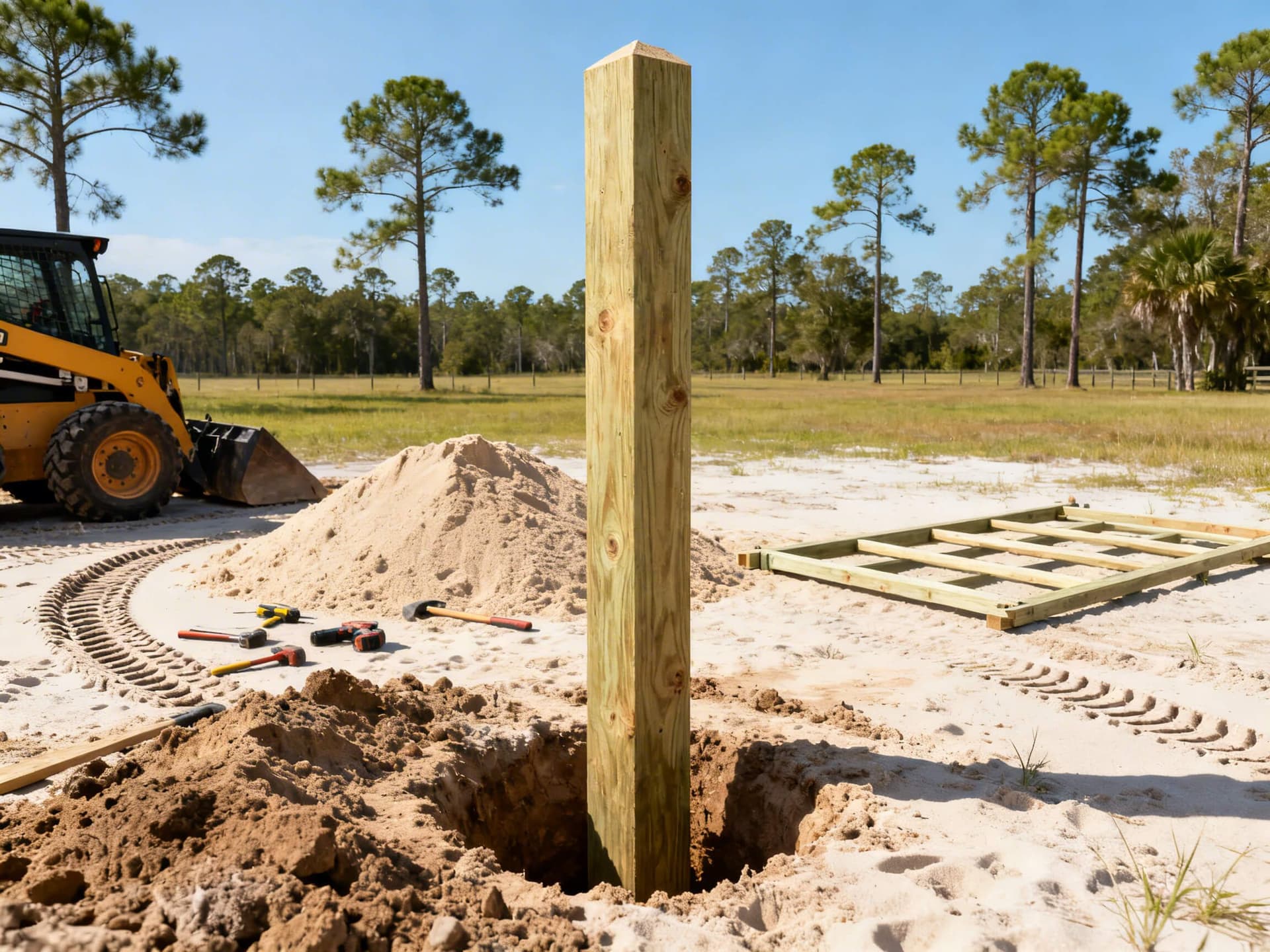
One of the biggest installation challenges in the Florida Panhandle is our sandy soil. Sand doesn't provide the same stability as clay, causing posts to shift and gates to sag over time. A professional installer overcomes this by digging extra deep post holes—often 3 to 4 feet—and setting the posts in large concrete footers to create an immovable anchor Ocala Fence Pros, 2025.
Navigating Local Regulations
Rules for a farm driveway gate can differ greatly depending on your location and property type. Bona fide farms often have different permitting requirements than residential properties MyFloridaLegal.com, 2025. Regulations for driveway access and sight lines can also vary between counties in South Georgia and Florida, so it's wise to consult with an expert who knows the local codes.
Frequently Asked Questions
How much do custom farm gates cost in Florida?
Custom farm gates in Florida can range from $2,000 for a simple design to over $10,000 for complex, large, or automated gates. The cost of professional installation, especially in sandy soil that requires more extensive foundation work, will also be a factor in the final price.
What is the best material for a farm gate in a humid, coastal area?
Aluminum is often the best choice for humid and coastal climates like the Florida Panhandle. Its natural resistance to rust and corrosion means it requires minimal maintenance compared to steel or wood, ensuring your custom farm gates stay looking new for years.
Do I need a permit for a farm driveway gate in Georgia or Alabama?
Permit requirements vary widely by county and state. Bona fide agricultural properties may be exempt from certain building codes. However, residential entrances usually need to comply with local zoning and state DOT regulations for driveways. It's always best to consult an experienced local fencing contractor.
How do you make a custom farm gate last in the Southeast?
Longevity depends on two key factors: choosing a climate-appropriate material (like rust-proof aluminum or properly galvanized steel) and ensuring a professional installation. Using deep-set posts with robust concrete footers is essential to handle our region's sandy soil and high winds, preventing sagging and ensuring durability.
A well-built farm gate is a long-term investment in your property's function, security, and curb appeal. Achieving the perfect balance of personal style, durable materials, and expert installation is key. Working with a specialist who understands and has experience with our region's specific challenges—from sandy soil to coastal humidity—is the surest way to get a gate that performs for decades.
Ready to build a gate that’s as tough and reliable as your farm? Contact the experts at Bomann Fencing today for a consultation on your property in Dothan, AL, the Florida Panhandle, or South Georgia.
Share this article
Related Posts
Need Help?
Get expert fencing advice and free quotes. Our team is ready to help with your project.
Available Mon-Fri, 8am-6pm EST
Related Posts
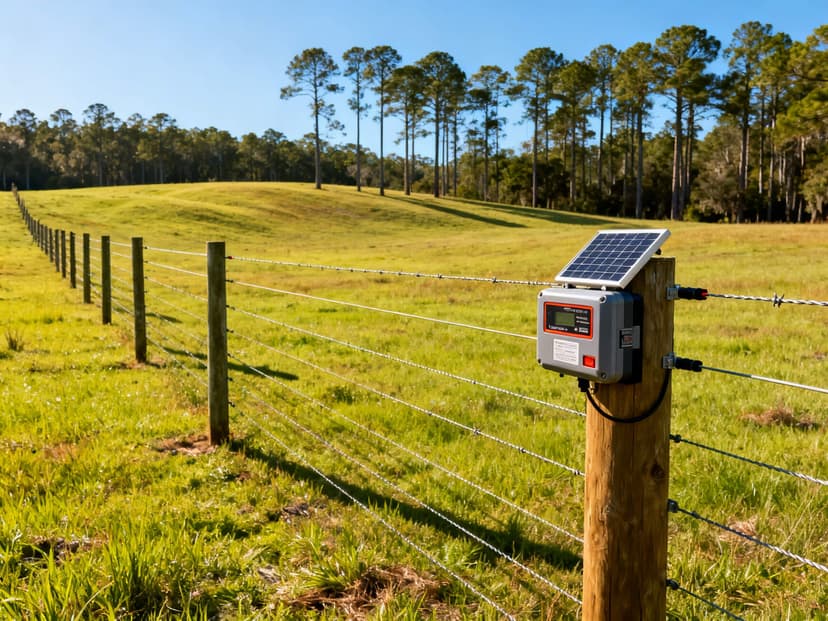
How to Choose the Best Electric Fence Charger for Cattle
Matching Energizer Power to Your Cattle & Fence Your electric fence is a psychological barrier, not a physical one. To b...

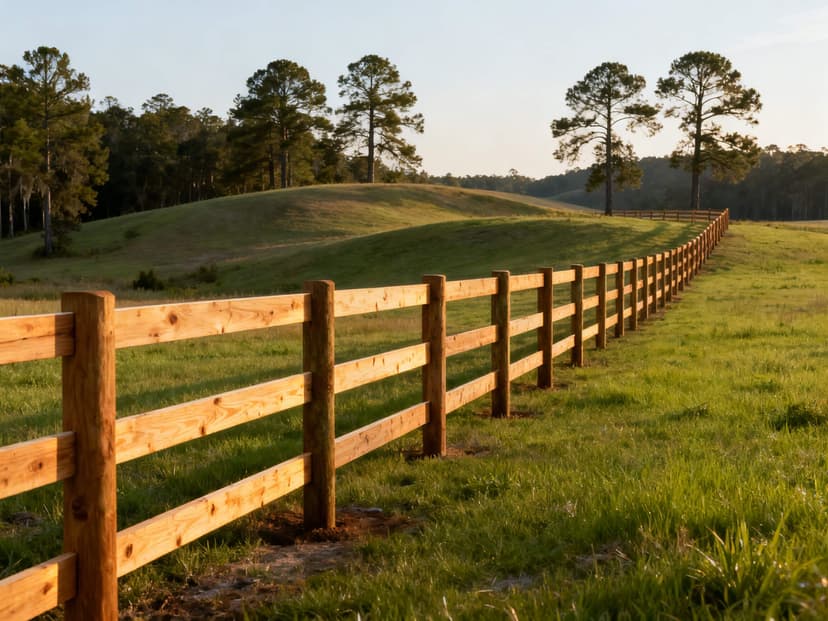
Wood Farm Fence: Pine vs. Cedar for Your Southeast Farm
The Main Contenders: A Look at Two Popular Fencing Woods When you're building a fence to protect your livestock and defi...
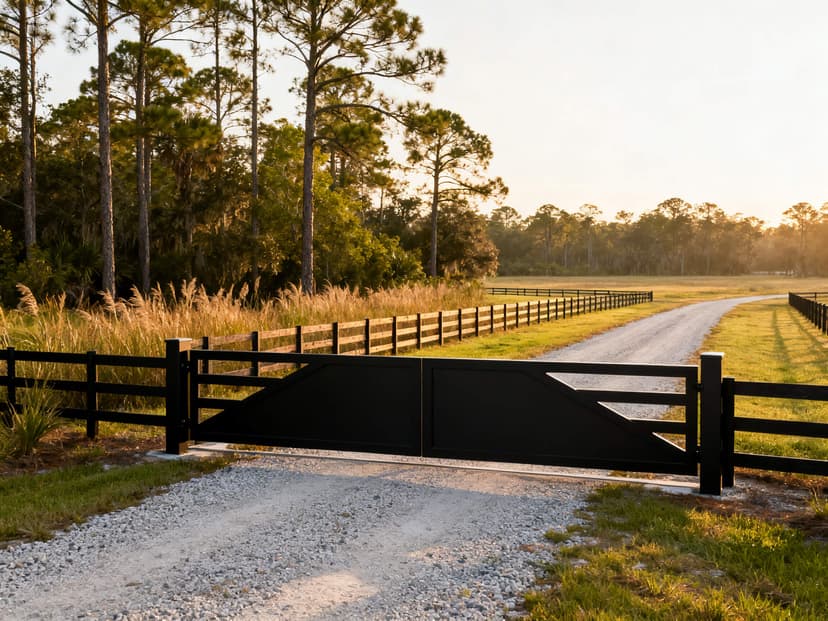
Farm Driveway Gate: A Guide to Planning & Automation
Key Planning Decisions for Your Farm Entrance Gates Manually opening and closing a heavy farm gate wastes valuable time ...
330 x 4 Fence Guide: Pro Installation Tips & Costs
Planning Your 330 x 4 Fence: Materials & Layout A successful livestock fence starts long before the first post is driven...
Cable Fence for Cattle: The SE Rancher's Durable Choice
Why Choose a Cable Fence System for Your SE Ranch? You need a strong, reliable fence to contain your cattle across large...