Wood Farm Fence: Pine vs. Cedar for Your Southeast Farm

The Main Contenders: A Look at Two Popular Fencing Woods
When you're building a fence to protect your livestock and define your property lines, wood is a timeless and durable choice. For farm owners in the Southeast, the decision often comes down to two main options. Understanding the difference is the first step toward building a fence that lasts for decades.
Pressure-Treated Pine: The Workhorse of Farm Fencing
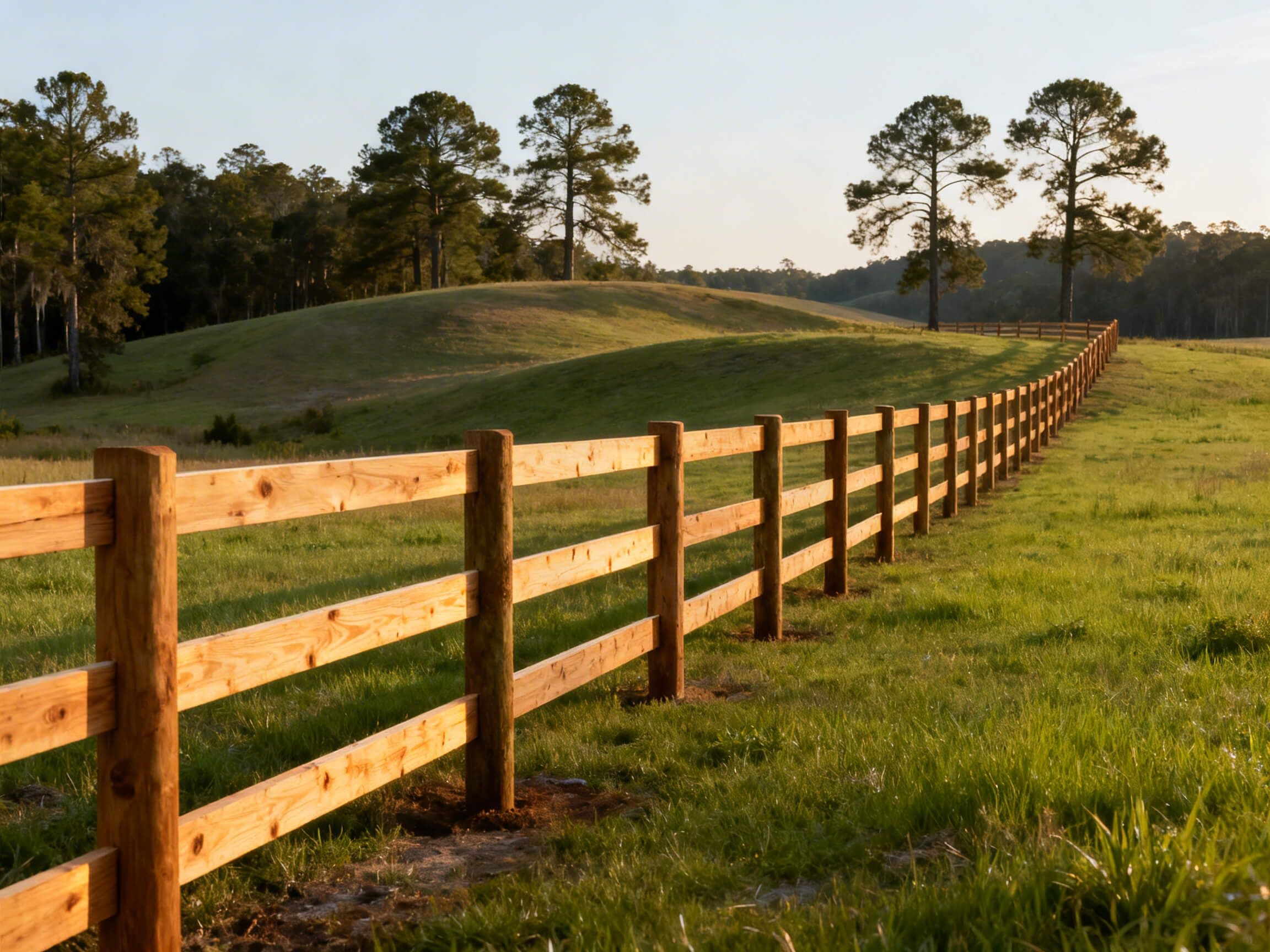
Pressure-treated pine is the most common material used for agricultural fencing, and for good reason. The wood is placed in a depressurized tank that removes air from its cells, then floods it with chemical preservatives (modernly CBA or CA). This process ensures deep penetration, providing excellent protection against rot and insect damage.
At Bomann Fencing, we often use posts with a .60 CCA treatment, a higher grade than the standard, to give your fence an even stronger defense against the harsh weather we see from Pensacola, Florida, to Mobile, Alabama.
Natural Cedar: The Premium Choice for Longevity & Aesthetics
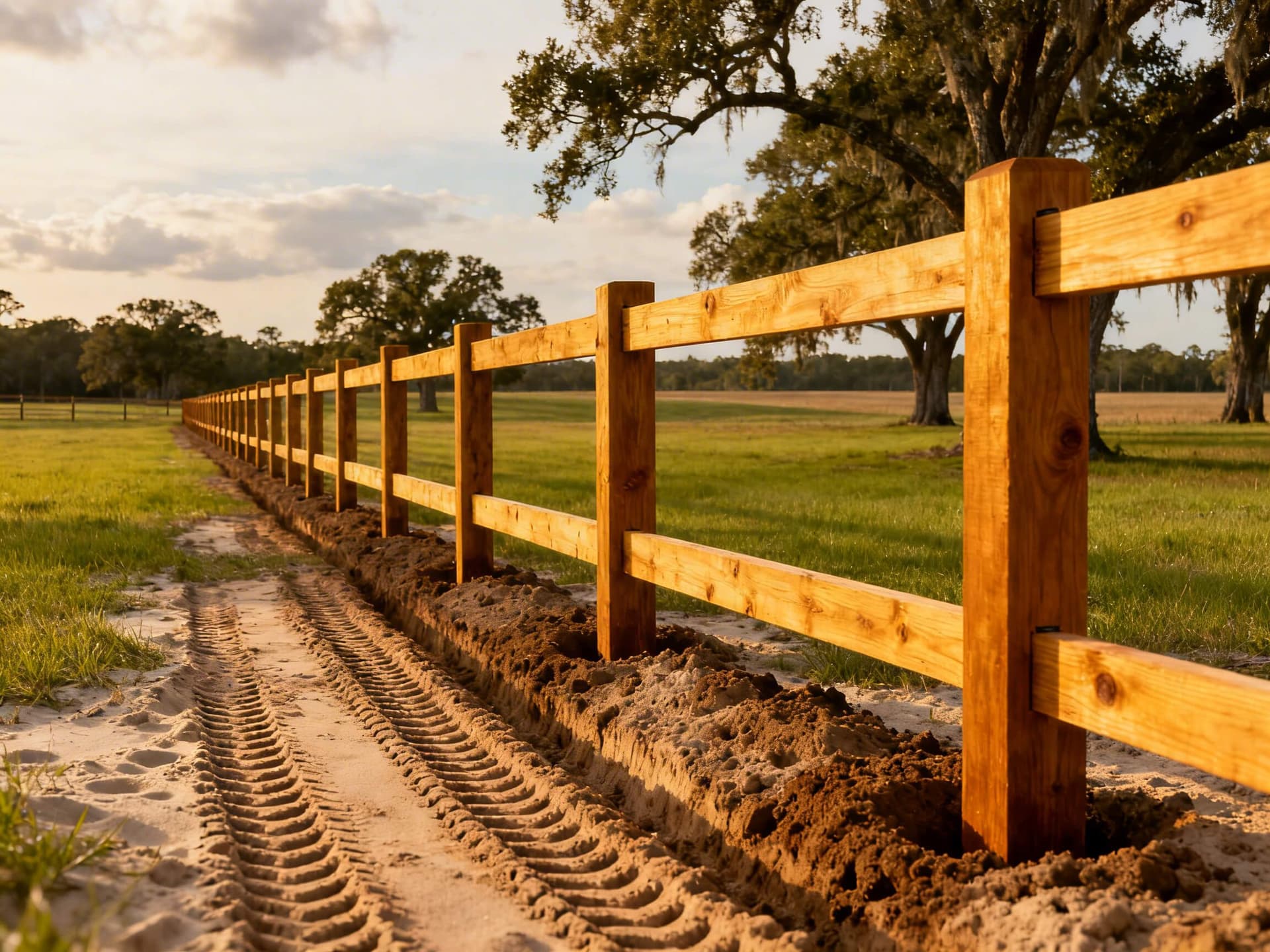
Cedar is a beautiful wood that comes with its own built-in defense system. It contains natural oils and tannins that make it highly resistant to decay, rot, and many insects. Cedar fence boards are also very stable, meaning they are less likely to warp or shrink in the high-humidity environments found across South Georgia.
Its rich color and classic appearance make cedar a top pick for high-visibility areas, equestrian properties, and farm entryways near communities like Auburn, Alabama.
Head-to-Head Comparison for Farms in Florida, Alabama, & Georgia
Choosing between pressure-treated pine and cedar involves weighing upfront costs against long-term performance. Here’s how they stack up for landowners in our tri-state service area.
Upfront Cost vs. Lifetime Value
There's no question that pressure-treated pine is the more affordable option at the outset. Our research shows that pine boards can be around 35% cheaper than cedar Regional Farm Fence Study, 2025. However, cedar's extended lifespan often gives it a lower total cost over time because you won't need to replace boards as frequently. Keep in mind that material costs in the Florida Panhandle can carry a slight premium due to coastal supply chain logistics.
Durability & Longevity in a Humid, High-Pest Climate
A well-maintained pressure-treated pine fence can last 15-20 years. Cedar often lasts longer, typically 20-25 years or more. In the constant humidity around places like Gainesville, Florida, cedar’s natural resistance gives it an edge. While treated pine resists most pests, it can be vulnerable to specific insects like powder-post beetles, which are a known issue on some properties in South Alabama, particularly near Dothan.
Maintenance Requirements: Sealing, Staining, and Repairs
All wood fences require some maintenance to maximize their lifespan. A pressure-treated pine fence typically needs to be cleaned and resealed or stained every 5-7 years to protect it from UV rays and moisture. Cedar is more forgiving, often going 8-10 years between treatments Regional Farm Fence Study, 2025. Factoring in this long-term labor makes cedar an attractive option for busy farm owners from Tallahassee to Tifton, Georgia.
The Verdict: Which Wooden Farm Fence is Right for Your Property?
Need Help?
Get expert fencing advice and free quotes. Our team is ready to help with your project.
Available Mon-Fri, 8am-6pm EST
The best wood farm fence for you depends entirely on your budget, your priorities, and how you use your land. Whether you're in Quincy, Florida, or Geneva, Alabama, one of these options will meet your needs.
Choose Pressure-Treated Pine if…
You should opt for pressure treated fence boards if your primary concern is the initial budget. It provides fantastic strength for general livestock containment, like for cattle ranches near Marianna and Chipley, Florida. Be prepared to follow a regular maintenance schedule to get the most out of your investment.
Choose Cedar if…
Cedar is your best choice if long-term durability and low maintenance are your top priorities. Its aesthetic appeal makes it perfect for high-value horse farms near Ocala, Florida, or creating a stunning property entrance in Montgomery, Alabama. It's an investment that pays for itself in beauty and longevity.
Consider Hybrid Wood Fence Designs
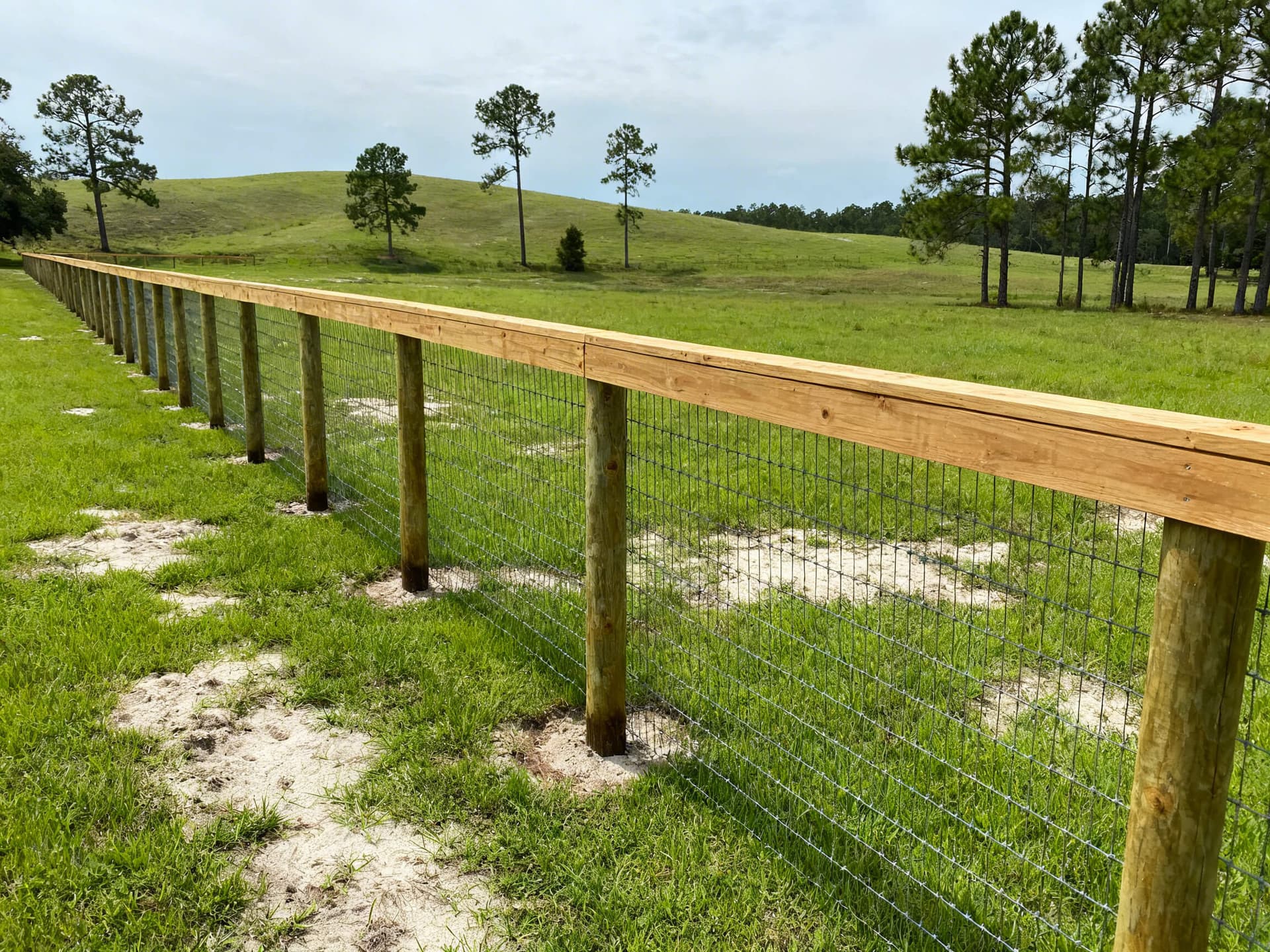
You don't have to choose just one. Many landowners are opting for hybrid wood fence designs. A popular and cost-effective solution involves using a wood top board for visibility with durable high-tensile wire below. This design is very popular in South Georgia, especially around Valdosta and Albany, and is often eligible for USDA-NRCS cost-share programs, providing excellent value and strength Regional Farm Fence Study, 2025.
Frequently Asked Questions
What is the most durable type of wood farm fence for a humid climate like Florida?
In a humid climate, both cedar and high-quality pressure-treated pine are durable choices. Cedar has a natural advantage against rot, but a professionally installed wood farm fence using properly treated pine and correct techniques will also provide decades of reliable service in areas like Panama City.
Is cedar or pressure-treated pine better for a horse fence in South Georgia?
Cedar is often preferred for horse fences near communities like Thomasville or Naylor, Georgia, due to its aesthetics and tendency to splinter less. However, a well-built pine board fence is perfectly safe and functional for horses when installed by experienced agricultural fencers.
How long does a pressure-treated wood farm fence last in the Southeast?
With proper maintenance, you can expect a pressure-treated wood farm fence to last 15 to 20 years in the Southeast. Lifespan depends on the quality of the materials, the installation method, and a consistent maintenance schedule of cleaning and sealing, especially in humid areas like Andalusia, Alabama.
What is the average cost per foot to install a wooden board fence in Alabama?
The fully installed cost for a wooden board fence in areas like Enterprise, Alabama, can range widely, typically from $44 to $87 per linear foot for a standard 3-board design. This price varies based on material choice (pine vs. cedar), fence height, terrain difficulty, and the total length of the project.
Your Fence, Built to Last
Ultimately, the choice between a pressure-treated pine or cedar wood farm fence comes down to a trade-off. Pine saves you money upfront, while cedar saves you time and money on long-term maintenance. The right choice is the one that aligns with your farm's budget, goals, and aesthetic vision.
No matter which material you choose, a quality installation is the single most important factor in your fence’s longevity. For expert advice and a fence built right the first time, call the agricultural fencing specialists at Bomann Fencing. We provide free consultations across the Florida Panhandle, South Alabama, and South Georgia.
Share this article
Related Posts

Need Help?
Get expert fencing advice and free quotes. Our team is ready to help with your project.
Available Mon-Fri, 8am-6pm EST
Related Posts
Solar Electric Fence Energizer: Cost vs. Long-Term Value
The Financial Breakdown: Upfront Investment vs. Lifetime Value Choosing the right energizer starts with understanding th...


How to Install Electric Fence for Cattle: A DIY Guide
Planning Your Fence & Choosing the Right Materials A reliable electric fence begins with a solid plan. Before you buy an...
How to Choose the Best Electric Fence Charger for Cattle
Matching Energizer Power to Your Cattle & Fence Your electric fence is a psychological barrier, not a physical one. To b...
Farm Driveway Gate: A Guide to Planning & Automation
Key Planning Decisions for Your Farm Entrance Gates Manually opening and closing a heavy farm gate wastes valuable time ...
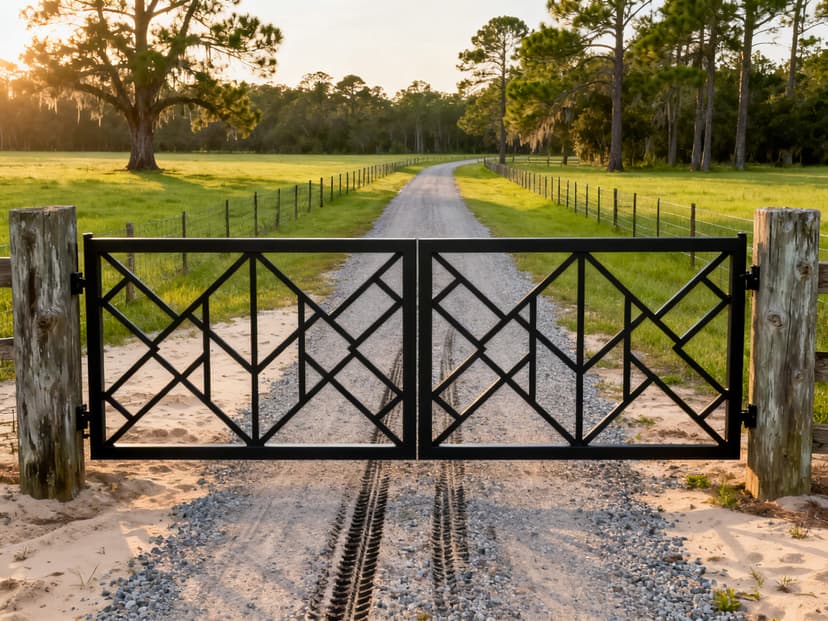
Custom Farm Gates: A Farmer’s Design & Planning Guide
A Farmer’s Guide to Designing and Planning Custom Farm Gates Choosing the right custom farm gate is a major decision for...