330 x 4 Fence Guide: Pro Installation Tips & Costs

Planning Your 330 x 4 Fence: Materials & Layout
A successful livestock fence starts long before the first post is driven. Proper planning ensures your investment contains your animals securely and stands strong for decades. For farmers and ranchers, understanding the components of a standard fence roll is the first step.
Decoding the "330 x 4": Understanding Standard Woven Wire Rolls
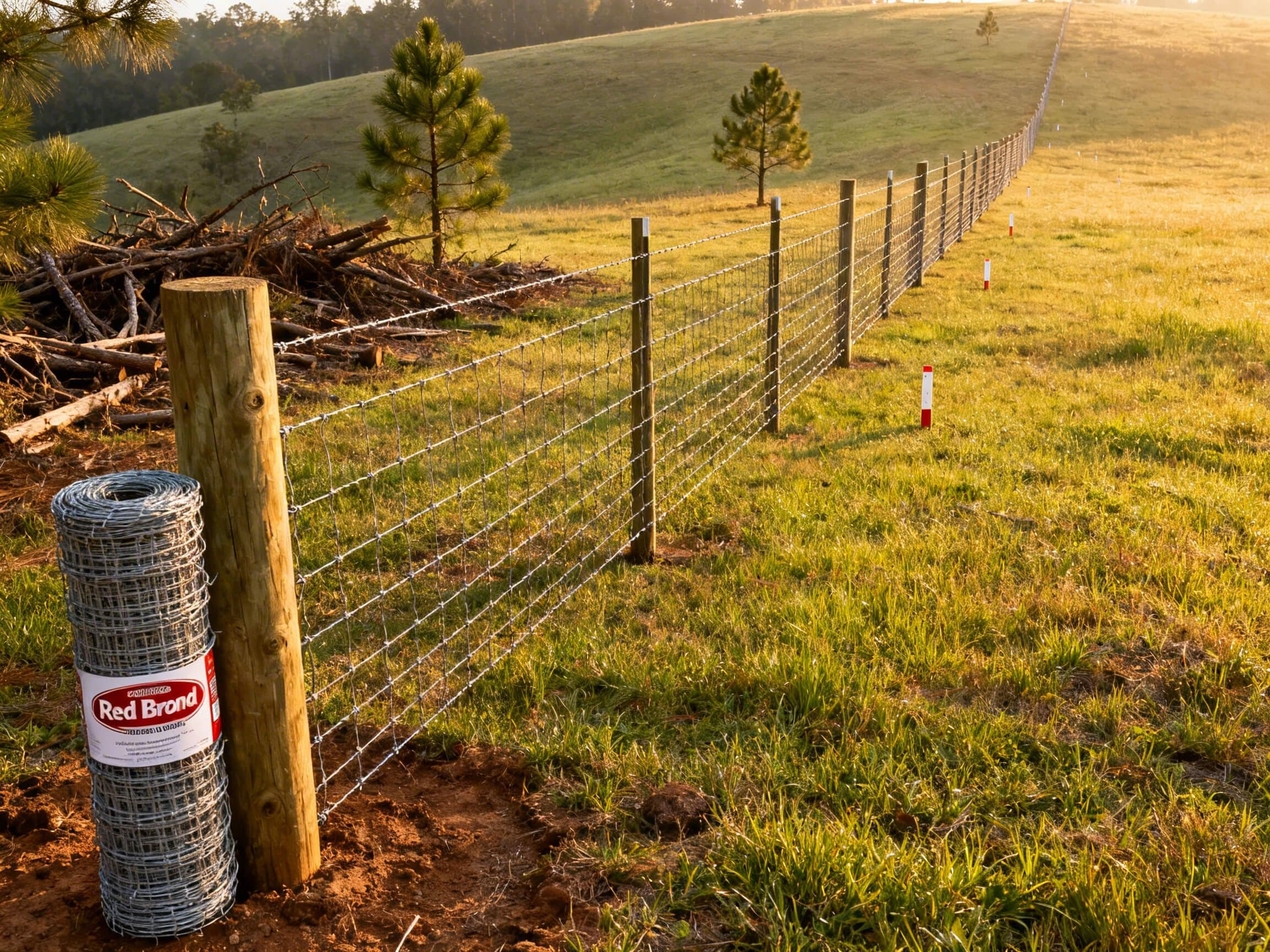
When you see "330 x 4," it refers to the standard dimensions of a woven wire fence roll. This means the roll is 330 feet long and stands 4 feet (or 48 inches) high. This length is a common agricultural standard because four rolls cover a quarter-mile, making it easy to calculate for large pastures. A popular configuration for this size is a 4x4 goat fence, which features a 4-inch by 4-inch mesh pattern perfect for containing sheep, goats, and other small livestock without risk of injury.
Choosing the Right Materials: Wire and Posts
In the humid climate of the Florida Panhandle and across the tri-state area, material choice is critical. Always opt for Class 3 galvanized wire, as found in a quality red brand fence 330 ft roll. This heavier zinc coating provides superior rust resistance, lasting decades longer than standard Class 1 wire. For posts, .60 CCA pressure-treated wood posts offer exceptional durability against rot and insects, while steel T-posts provide a faster installation option for interior fence lines.
Mapping Your Fence Line
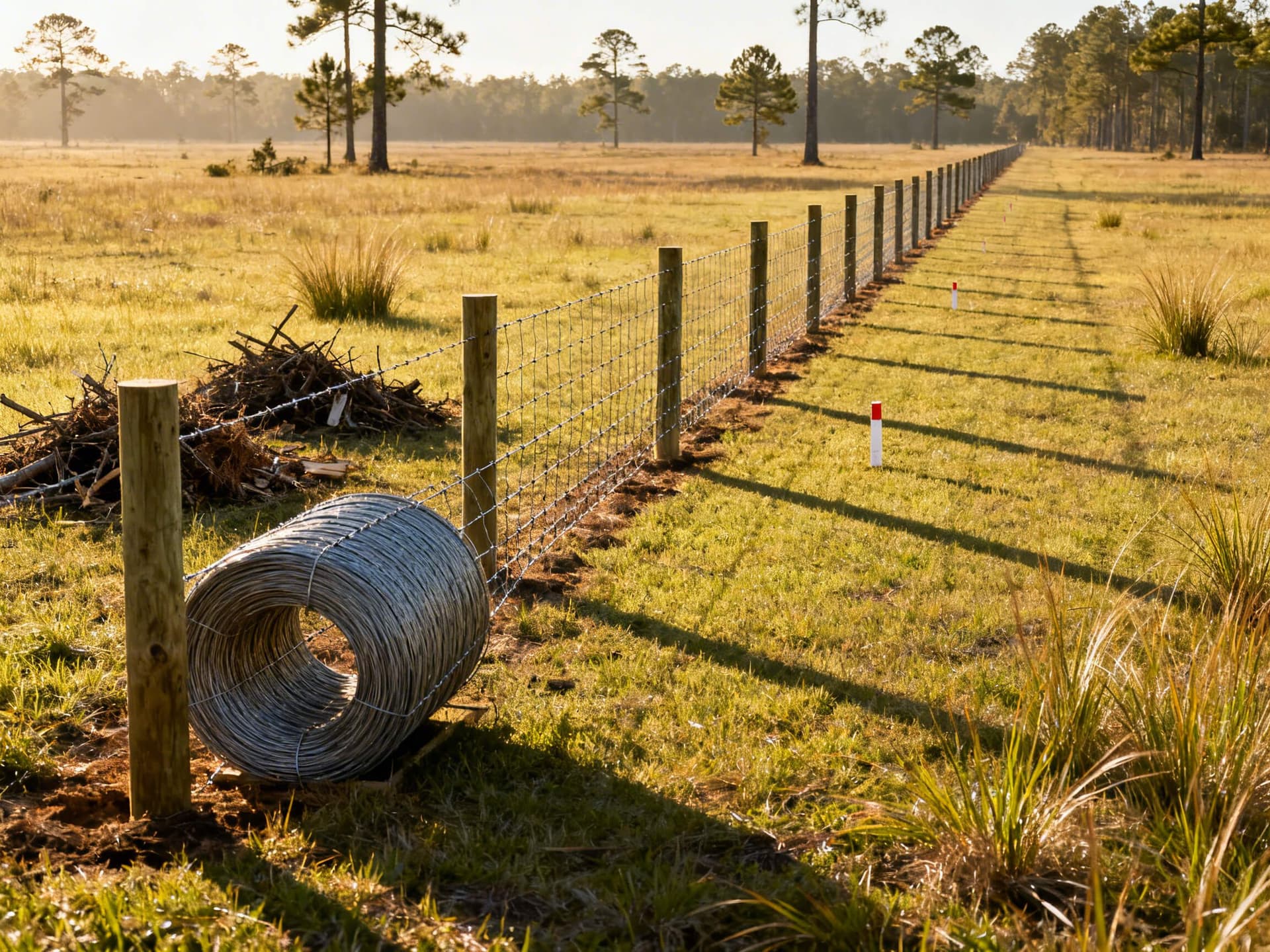
Before you unroll your wire, walk your property. Clear the proposed fence line of any brush, trees, or debris to create a straight, unobstructed path. Use marking flags or stakes to plot your post locations. For a sturdy 4x4 sheep and goat fence, space your line posts 8 to 12 feet apart. Be sure to mark precise locations for corners, ends, and any gates you plan to install on your property, whether it's in a rural community like Chipley or a larger farm in Valdosta.
The Foundation: Setting Posts for Southeast Soils
The strength of your entire fence depends on its foundation. In our region, soil conditions vary from coastal sand to inland clay, and each requires a specific installation technique. A post set incorrectly is a guaranteed point of failure.
Engineering Indestructible Corner Assemblies
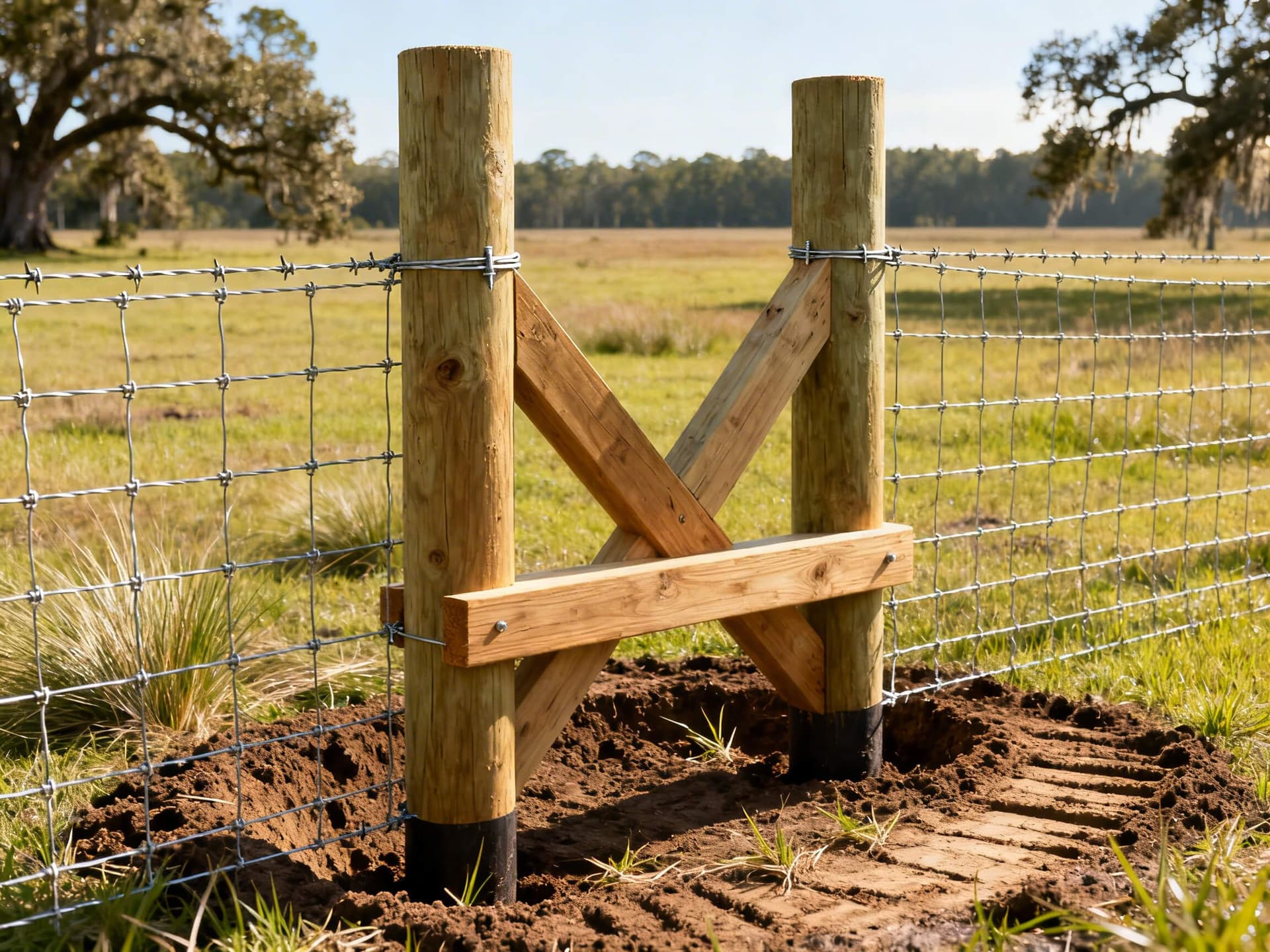
The corner posts and brace assemblies absorb nearly all the tension from a stretched wire fence. A well-built H-brace is non-negotiable. This assembly uses two large-diameter wood posts connected by a horizontal cross-member. For properties in coastal areas like Panama City and Pensacola, posts set in sandy soil must go 3 to 4 feet deep and be secured with concrete to prevent shifting and leaning over time SW Fences Port St. Lucie, 2025.
Setting Line Posts in Sand vs. Clay
Soil dictates your method. In the sandy soils of the Florida coast, post holes must be deeper and often wider to allow for a solid concrete footing. In contrast, the heavy clay soils found across South Alabama and parts of South Georgia provide excellent stability. For these areas, like around Andalusia, AL, or Thomasville, GA, the main concern is drainage. Placing a few inches of gravel at the bottom of the post hole before adding concrete or backfilling prevents water from pooling and rotting the wood.
Bracing for Gates and Ends
Just like corners, the posts on either side of a gate must be properly braced to handle the weight and movement of the gate itself. A single diagonal brace or a full H-brace assembly is essential. This step ensures your gate will continue to swing freely and latch correctly for years without sagging, a crucial detail for active operations in places like Marianna and Enterprise.
Installation: Stretching Wire & Finishing Touches
Need Help?
Get expert fencing advice and free quotes. Our team is ready to help with your project.
Available Mon-Fri, 8am-6pm EST
With your posts firmly in the ground, it's time to install the wire. This stage is where a good fence becomes a great one. The key is applying even, consistent tension without damaging the fence fabric.
How to Properly Stretch and Tension Your sheep and goat fence 330 ft
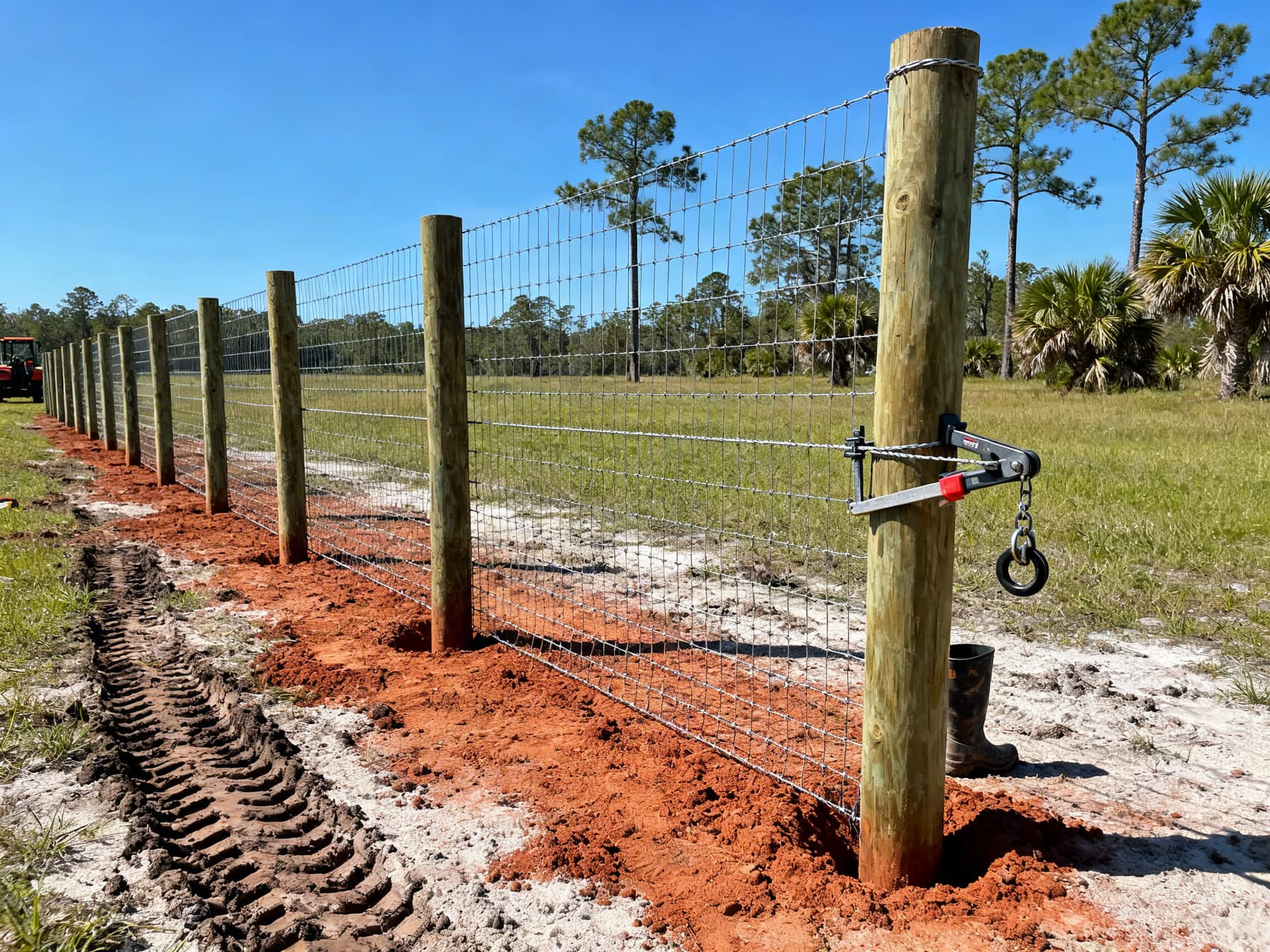
A loose, sagging fence is not only an eyesore but also a safety hazard. To get a tight fit, use a fence stretcher or come-along tool attached to your end post. The goal is to remove about 50% of the built-in "crimp" or wave from the horizontal wires. This creates a fenceline that is taut enough to repel animals but still has enough flexibility to handle temperature changes and minor impacts.
Attaching the Wire to Wood and T-Posts
When securing the wire, technique matters. For wood posts, use u-shaped fencing staples. Drive them in until they are snug, but not so tight that they crush the wire. The wire should be able to move slightly within the staple. For steel T-posts, use the specially designed metal clips that attach the wire securely to the post's knobs.
Adding Predator Deterrence
A standard woven wire fence is a good physical barrier, but adding an electric component creates a powerful psychological one. To deter coyotes and other predators common in areas around Auburn or Tifton, install a single "hot wire" on offset insulators about 6 inches off the ground Bomann Fencing, 2025. This simple addition teaches predators to stay clear of your fenceline, offering another layer of protection for your valuable livestock.
FAQs: Your 330 ft Fence Questions Answered
How much does it cost to install a 330 ft roll of goat fence in Florida?
The cost varies based on terrain, materials, and labor. Material for a single 330 x 4 roll of quality Class 3 woven wire is typically $350-$450. When you factor in posts, concrete, and professional labor for challenging Florida terrain, the total project cost for a 330-foot section can range from $1,500 to over $5,000, ensuring it's built to last Ergeon, 2025.
What is the best way to stretch a 330 x 4 Red Brand fence?
The best way to stretch a red brand fence 330 ft roll is with a dedicated fence stretcher or a reliable come-along tool. Attach the stretcher bar evenly to the wire and pull slowly until about half of the factory crimp is gone. This provides optimal tension without over-stressing the wire or your corner posts.
How deep should fence posts be in Florida's sandy soil for a 4x4 sheep and goat fence?
For a durable 4x4 sheep and goat fence in Florida's loose, sandy soil, corner and end posts must be set a minimum of 3 to 4 feet deep in concrete. Line posts can be slightly shallower but should still be set deeper than in clay soils to ensure the fence remains stable and secure for decades.
Can I install a 330 ft woven wire fence myself?
While a DIY installation is possible, it is a physically demanding job that requires specialized tools and knowledge. For a fence that protects your livelihood, hiring a professional ensures the job is done correctly. An expert installer familiar with the conditions around Ocala or Mobile can build a fence that avoids common pitfalls and provides lasting peace of mind.
A Fence Built to Last a Lifetime
A successful 330 x 4 fence installation in the Southeast hinges on three key factors: choosing high-quality Class 3 galvanized materials, engineering deep H-brace corners for our specific soil, and applying the correct wire tension. When these elements come together, you get more than just a boundary line; you get a durable, reliable structure that protects your livestock and your investment.
For a professional installation that guarantees durability for your livestock operation in Dothan, Montgomery, Gainesville, and across the tri-state area, trust the agricultural expertise of Bomann Fencing. We treat your farm as if it were our own. Contact us today for a comprehensive quote.
Share this article
Related Posts

Need Help?
Get expert fencing advice and free quotes. Our team is ready to help with your project.
Available Mon-Fri, 8am-6pm EST
Related Posts
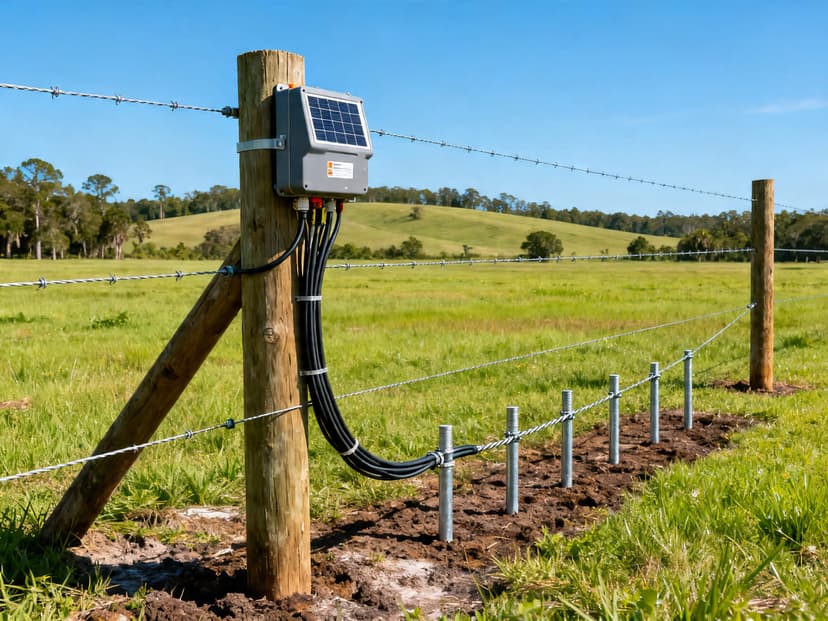
Electric Fence Voltage for Cattle: A Farmer's Guide
Voltage vs. Joules: Getting the Power Right for Your Livestock When you're protecting your livelihood, getting your elec...

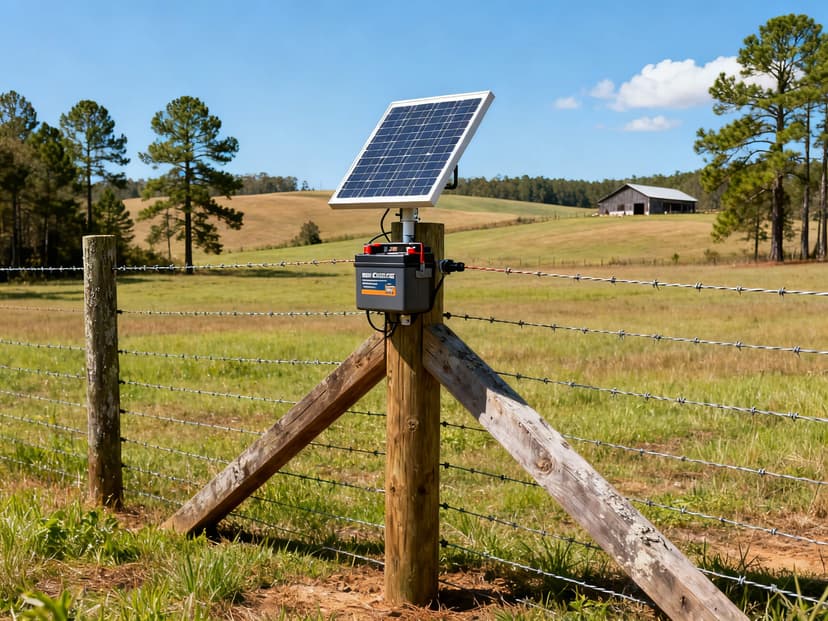
Solar Electric Fence Energizer: Cost vs. Long-Term Value
The Financial Breakdown: Upfront Investment vs. Lifetime Value Choosing the right energizer starts with understanding th...

How to Install Electric Fence for Cattle: A DIY Guide
Planning Your Fence & Choosing the Right Materials A reliable electric fence begins with a solid plan. Before you buy an...
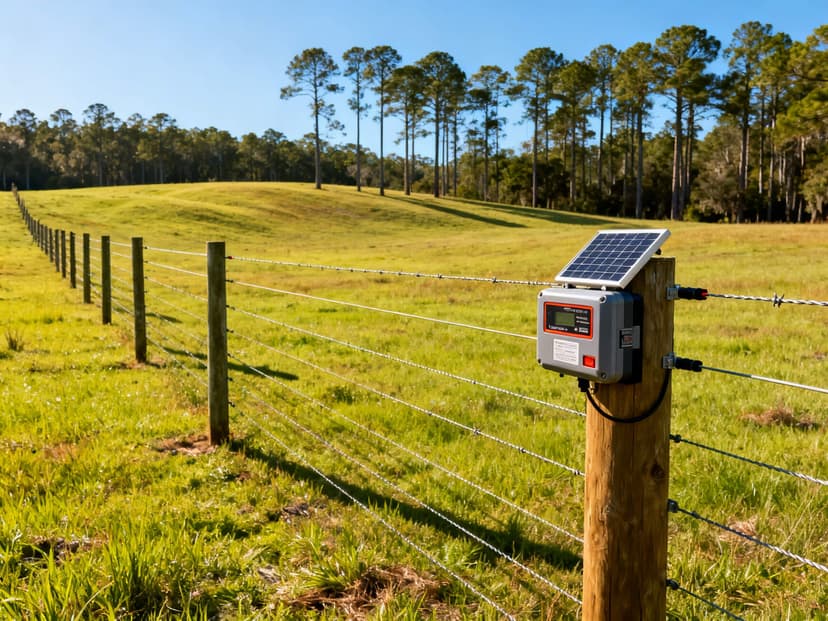
How to Choose the Best Electric Fence Charger for Cattle
Matching Energizer Power to Your Cattle & Fence Your electric fence is a psychological barrier, not a physical one. To b...
Wood Farm Fence: Pine vs. Cedar for Your Southeast Farm
The Main Contenders: A Look at Two Popular Fencing Woods When you're building a fence to protect your livestock and defi...