4 ft Field Fence: A Farmer's Guide to Cost & Setup

A Complete Guide to 4 ft Field Fence for Your Modern Farm
For farmers and ranchers across the Florida Panhandle, South Alabama, and South Georgia, a fence is more than a boundary line. It's a critical tool that protects your livestock, your property, and your livelihood. Choosing and installing the right 4 ft field fence is an investment in your farm's future, and getting it right the first time saves you decades of headaches and costly repairs.
This guide walks you through the essentials of selecting materials, including 6 ft fence applications, and using proven setup techniques that stand up to the unique challenges of our Southeastern climate. From the sandy soil near Pensacola to the rolling pastures around Thomasville, a durable fence is achievable with the right knowledge.
Why a 4 ft Field Fence is the Standard for Southeastern Farms
While fencing comes in many heights, the 4-foot option has become a trusted standard for agricultural operations for several key reasons. It offers a practical balance of cost, effectiveness, and security for many common applications.
The Ideal Height for Cattle and Perimeter Security
For most cattle operations, a 4 ft field fence provides the perfect balance of containment and cost-effectiveness. The University of Florida's agricultural experts confirm that a properly built four-foot fence, whether woven wire or barbed wire, is adequate for containing most cattle breeds UF/IFAS Extension Duval County. This height is tall enough to discourage animals from challenging it while keeping material and labor costs reasonable for fencing large properties in areas like Marianna or Dothan.
Understanding When You Might Need a 6 ft Field Fence
While four feet is often enough, certain situations demand a taller barrier. A 6 ft field fence is the recommended choice for containing horses, as it prevents jumping and reduces injury risk. It's also necessary for managing more athletic animals or in areas with high deer or wildlife pressure, a common concern for farm owners in South Georgia near communities like Albany. The taller height does increase material costs and requires more robust installation, but it’s a necessary upgrade for specific needs.
Aligning with Florida and Alabama Fencing Laws
A well-built fence also offers legal protection. States like Florida and Alabama have laws (such as Florida Statute 588 and Alabama Code Title 3) that define what constitutes a "lawful fence." Installing a sturdy 4 ft field fence that meets these standards is crucial for establishing landowner liability and protecting you if livestock breaches a boundary line. It ensures you have done your part to responsibly secure your property.
Choosing Fence Materials That Survive the Humid South
Our region’s high humidity, intense sun, and coastal salt spray can destroy lesser fence materials in just a few years. Investing in quality from the start is the only way to build a fence that truly lasts for decades in places like Mobile, Alabama, or Panama City, Florida.
Why Class 3 Galvanized Wire is Non-Negotiable
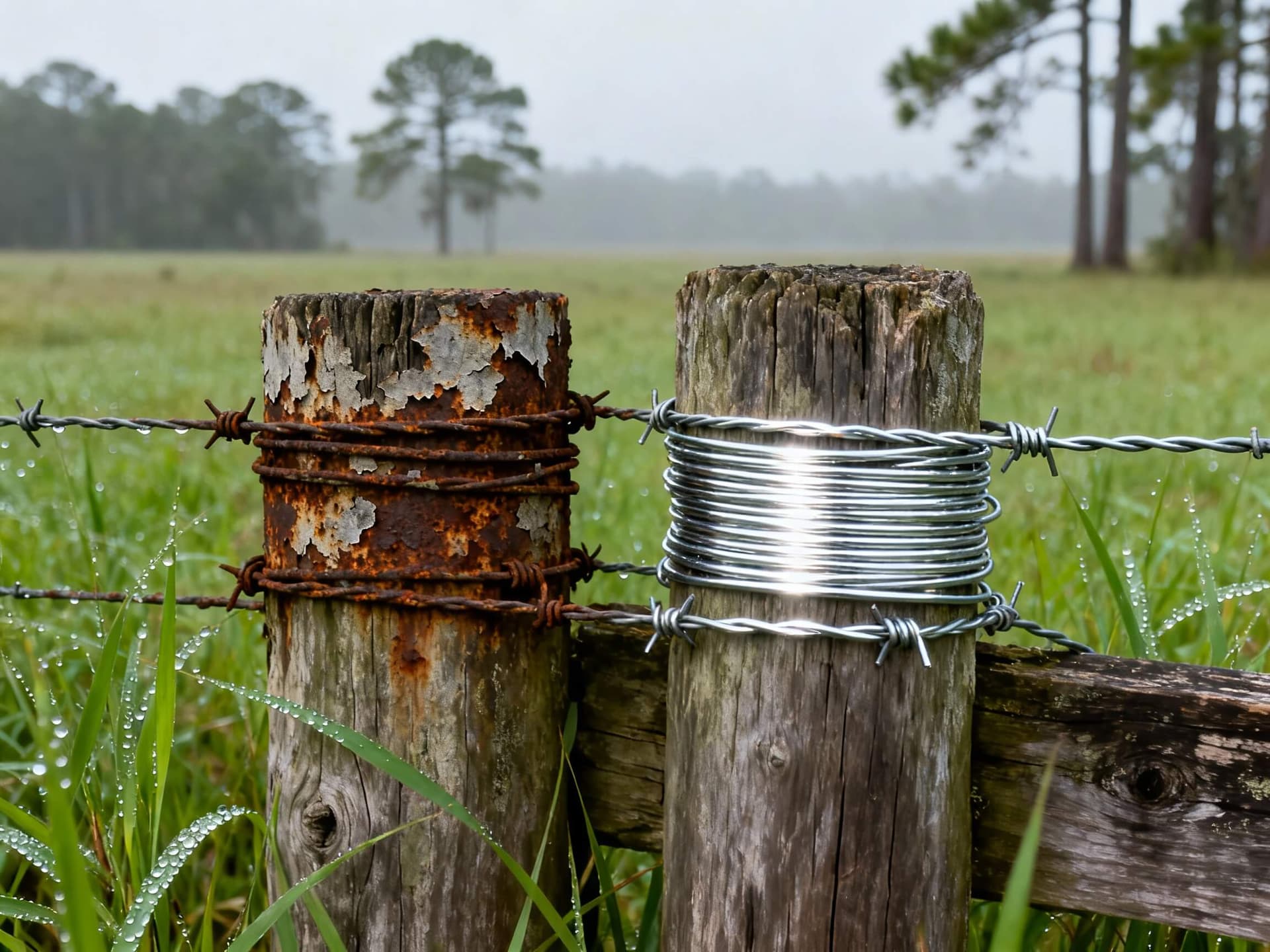
In the Southeast, not all wire is created equal. Class 1 galvanized wire, the minimum standard, will rust prematurely in our humid climate. Class 3 galvanized wire has a much thicker zinc coating that protects the steel from corrosion for years longer, especially in coastal areas with salt spray American Galvanizers Association. Choosing Class 3 is a non-negotiable step for ensuring the long-term integrity of your fence.
Selecting the Right Wire Gauge and Brands
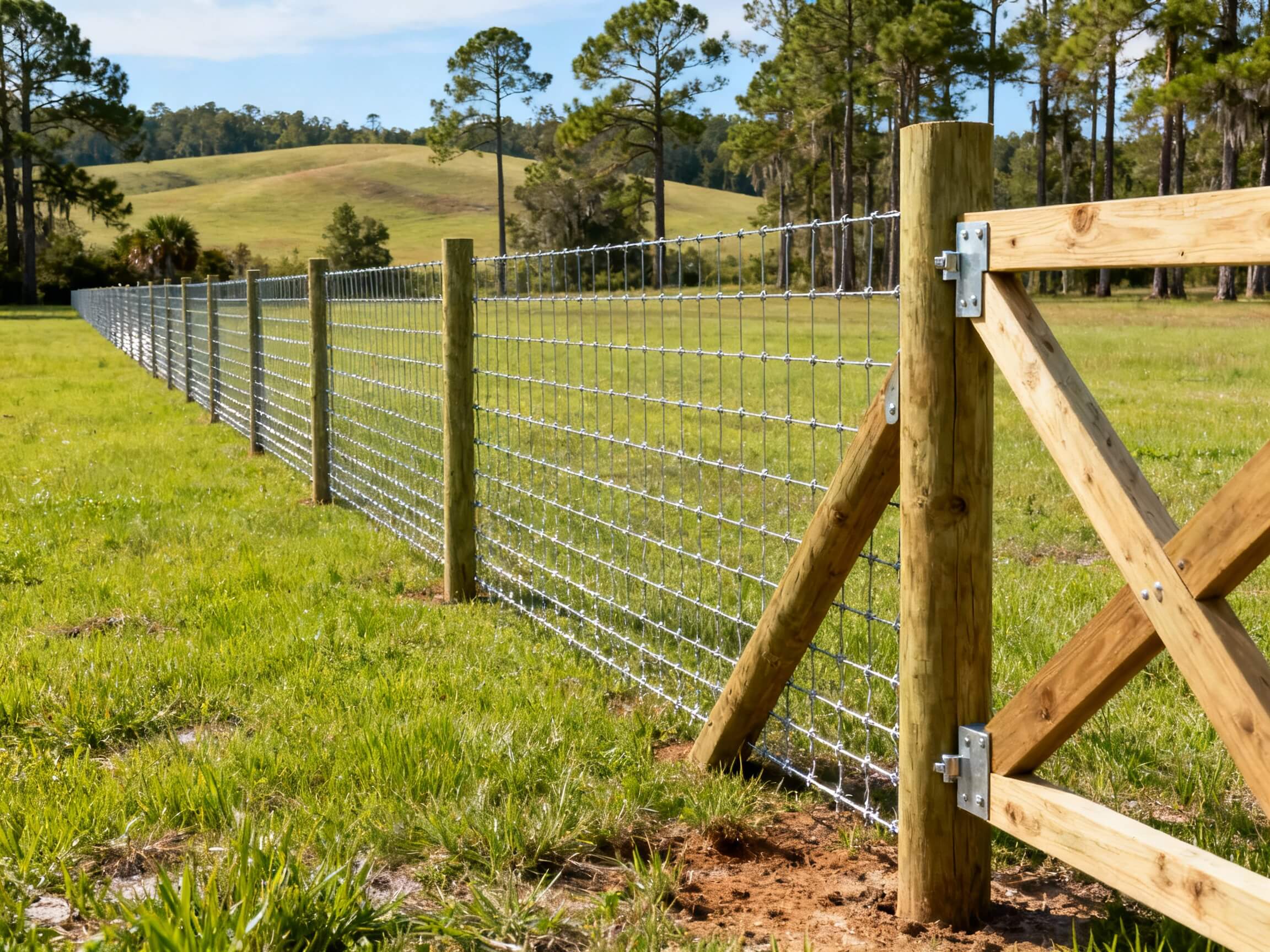
For most woven wire applications, a 12.5 to 14-gauge wire provides an excellent mix of strength and value. Trusted manufacturers like Red Brand field fence are known for producing consistent, high-quality wire that stands up to the demands of agricultural use. Heavier gauge wire may be needed for high-pressure areas like corrals or for containing larger, more powerful animals.
The Importance of Pressure-Treated Wood Posts
The posts are the backbone of your fence, and in our region, they face constant threats from moisture and insects. We insist on using .60 CCA pressure-treated wood posts, which offer superior protection compared to the standard .40 CCA treatment. This is especially vital for corner and brace posts that bear the fence’s tension and must remain solid in the sandy soils of the Florida Panhandle and southern coastal plains.
A Step-by-Step Guide to Proper Field Fence Setup
The best materials in the world will fail if the installation is poor. A proper field fence setup requires specific techniques to handle our region’s unique soil conditions and weather, ensuring your fence remains straight and tight for years to come.
The Foundation: Corner Posts and H-Bracing
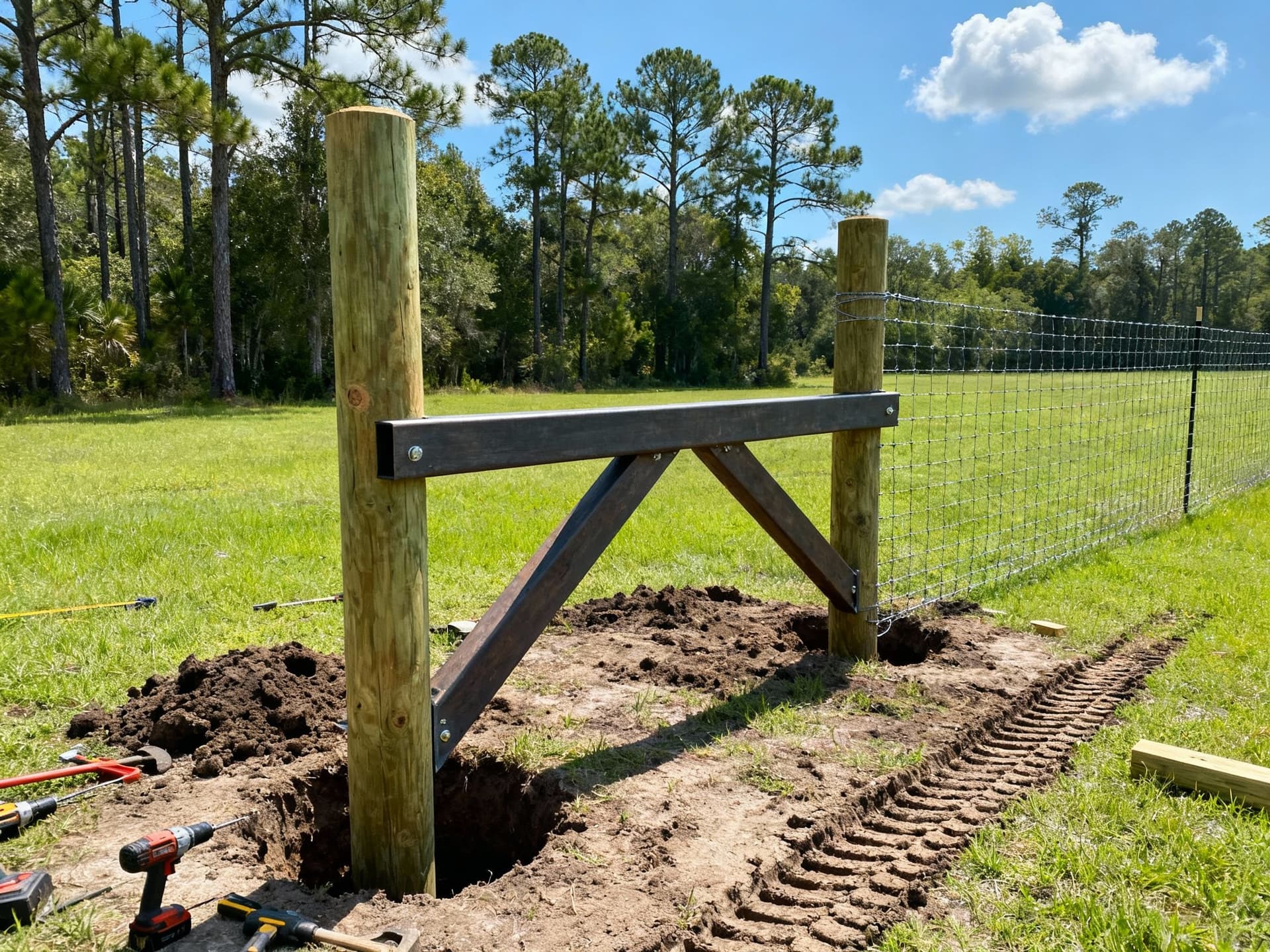
Every professional fencer knows that a fence is only as strong as its corners. A correctly built H-brace assembly is the most critical part of the entire structure Powerflex. It is designed to handle hundreds of pounds of wire tension and prevent posts from leaning or pulling out of the ground. On the long fence lines common on farms around Tallahassee and Montgomery, properly installed H-braces are what keep the entire fence standing strong.
Setting Posts for Sandy Soil and Hurricane Winds
From Bonifay to Ocala, our soils can be sandy and soft, and our weather can be extreme. To counter this, posts must be driven deep into the ground. We recommend a minimum depth of 36 to 48 inches for corner posts to create a stable foundation that can withstand hurricane-force winds and prevent shifting over time. Using a skid-steer post driver ensures posts are set firmly and consistently, even in challenging terrain.
Tensioning and Attaching Livestock Fence Rolls
Once the posts are set, the wire must be stretched correctly. Unrolling livestock fence rolls and achieving the right tension is both an art and a science. The goal is to apply about 150-250 pounds of pressure to make the wire taut enough to contain animals but with enough flexibility to handle temperature changes. This requires professional tools like fence stretchers and come-alongs to do the job safely and effectively.
Budgeting for Your 4 ft Field Fence Investment
A quality agricultural fence is a significant investment, but it delivers decades of value. Understanding the costs involved helps you plan for a solution that fits your budget and protects your assets for the long term.
Calculating Your Cost Per Linear Foot
The cost of a professionally installed 4 ft field fence in our region typically ranges from $2 to $7 per linear foot for high-tensile or quality woven wire. This price accounts for high-quality materials and the expert labor required for a durable installation. While cheaper options exist, they often cut corners on materials or techniques, leading to a much shorter lifespan and higher repair costs down the road.
Factoring in Gates, Clearing, and Long-Term Value
When budgeting, be sure to account for extra costs like gate installations, land clearing, and removal of old fences. Remember that a higher upfront investment in quality directly translates to a lower total cost of ownership. A fence built right by experts from a company like Bomann Fencing is a one-time expense that pays for itself through decades of reliable service.
We understand that a new fence is a major project, which is why we partner with Hearth to offer flexible financing options to help make your project more affordable.
Frequently Asked Questions
How much does professional installation of a 4 ft field fence cost in the Florida Panhandle?
In the Florida Panhandle, the cost for a professionally installed 4 ft field fence using quality materials like woven wire or high-tensile wire typically ranges from $2 to $7 per linear foot. The final price can vary based on terrain, land clearing needs, and the number of gates required.
Is a 4-foot field fence tall enough to reliably contain goats?
While a standard 4-foot fence can work for some goats, they are known climbers and escape artists. For reliable goat containment, we often recommend specialized goat fencing with smaller 4"x4" openings or adding an electric offset wire to a standard 4 ft field fence to discourage climbing.
What is the best way to prevent a 4 ft field fence from rusting near coastal areas like Mobile, Alabama?
The single most effective way to prevent rust in coastal areas like Mobile or anywhere along the Gulf Coast is to use Class 3 galvanized wire. This heavier coating provides significantly more protection against salt spray and humidity than standard Class 1 wire. For maximum protection, PVC-coated wire offers an additional barrier against corrosion.
How far apart should T-posts be for a 4 ft field fence in sandy soil?
For a 4 ft field fence using woven wire in typical sandy soil, we recommend spacing T-posts between 10 and 12 feet apart. If the terrain is very uneven or you expect high pressure from livestock, placing them slightly closer at 8 to 10 feet will add extra stability and support.
A durable, long-lasting 4 ft field fence in our region isn't about finding the cheapest materials; it's about investing in the right ones. By choosing Class 3 wire and properly treated wood posts, and by insisting on proven installation techniques like deep-set posts and robust H-bracing, you get a fence that stands up to our unique Southeastern climate.
Protect your livestock and your property for decades to come. For an expert consultation and a fence built right the first time, call Bomann Fencing for a free estimate on your project in the Florida Panhandle, South Alabama, or South Georgia.
Share this article
Related Posts
Need Help?
Get expert fencing advice and free quotes. Our team is ready to help with your project.
Available Mon-Fri, 8am-6pm EST
Related Posts
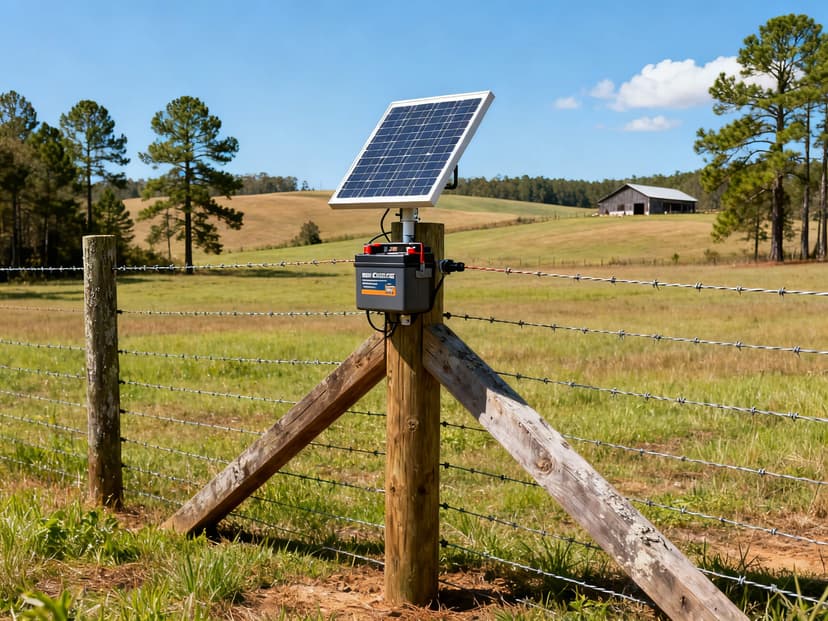
Solar Electric Fence Energizer: Cost vs. Long-Term Value
The Financial Breakdown: Upfront Investment vs. Lifetime Value Choosing the right energizer starts with understanding th...

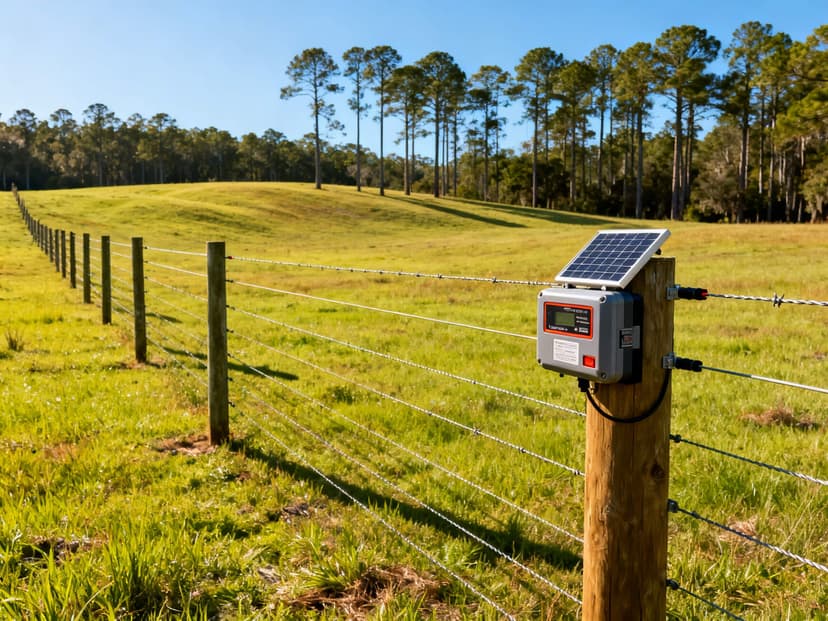
How to Choose the Best Electric Fence Charger for Cattle
Matching Energizer Power to Your Cattle & Fence Your electric fence is a psychological barrier, not a physical one. To b...
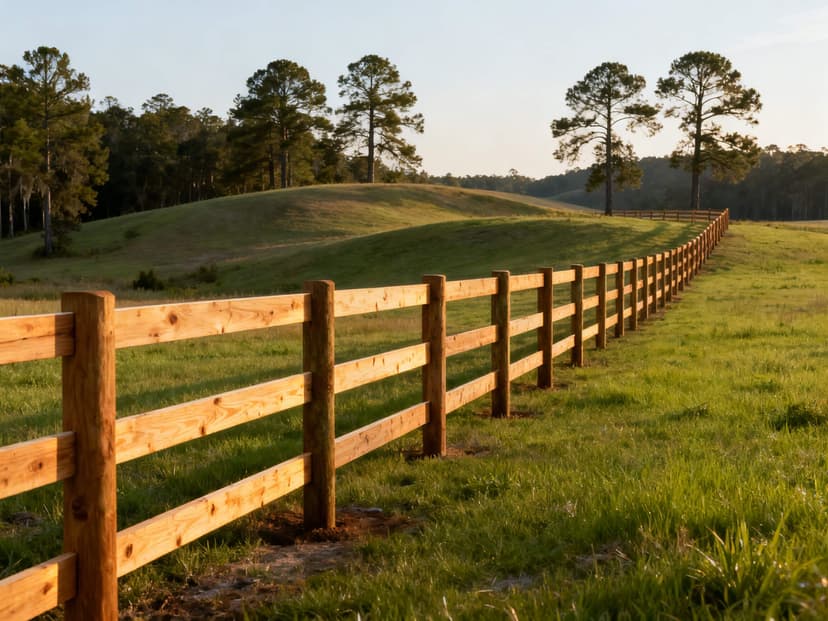
Wood Farm Fence: Pine vs. Cedar for Your Southeast Farm
The Main Contenders: A Look at Two Popular Fencing Woods When you're building a fence to protect your livestock and defi...
Farm Driveway Gate: A Guide to Planning & Automation
Key Planning Decisions for Your Farm Entrance Gates Manually opening and closing a heavy farm gate wastes valuable time ...
Custom Farm Gates: A Farmer’s Design & Planning Guide
A Farmer’s Guide to Designing and Planning Custom Farm Gates Choosing the right custom farm gate is a major decision for...