Cattle Fence Roll: The Complete Guide for Southeast Farms

Understanding Your Cattle Fence Roll Options
When fencing a large operation, the type of wire you choose is a decision that will impact your farm for decades. Modern fencing has moved beyond basic barbed wire, offering solutions that provide superior strength, longevity, and security. Understanding these options is the first step toward a sound investment.
High-Tensile vs. Traditional Wire: Why Strength Matters
There's a significant difference between standard low-tensile wire and modern high-tensile systems. High-tensile wire is engineered with a strength of 170,000 to 250,000 PSI, allowing it to absorb impact from livestock or fallen debris and spring back into place. Traditional wire, in contrast, stretches and sags, requiring constant re-tensioning and repairs.
For ranches in the humid Southeast, it's also critical to choose wire with Class 3 galvanization. This thicker coating provides superior rust and corrosion resistance, ensuring your fence stands strong against moisture and prolonging its life significantly.
Woven Wire Deep Dive: Fixed-Knot vs. Hinge-Joint
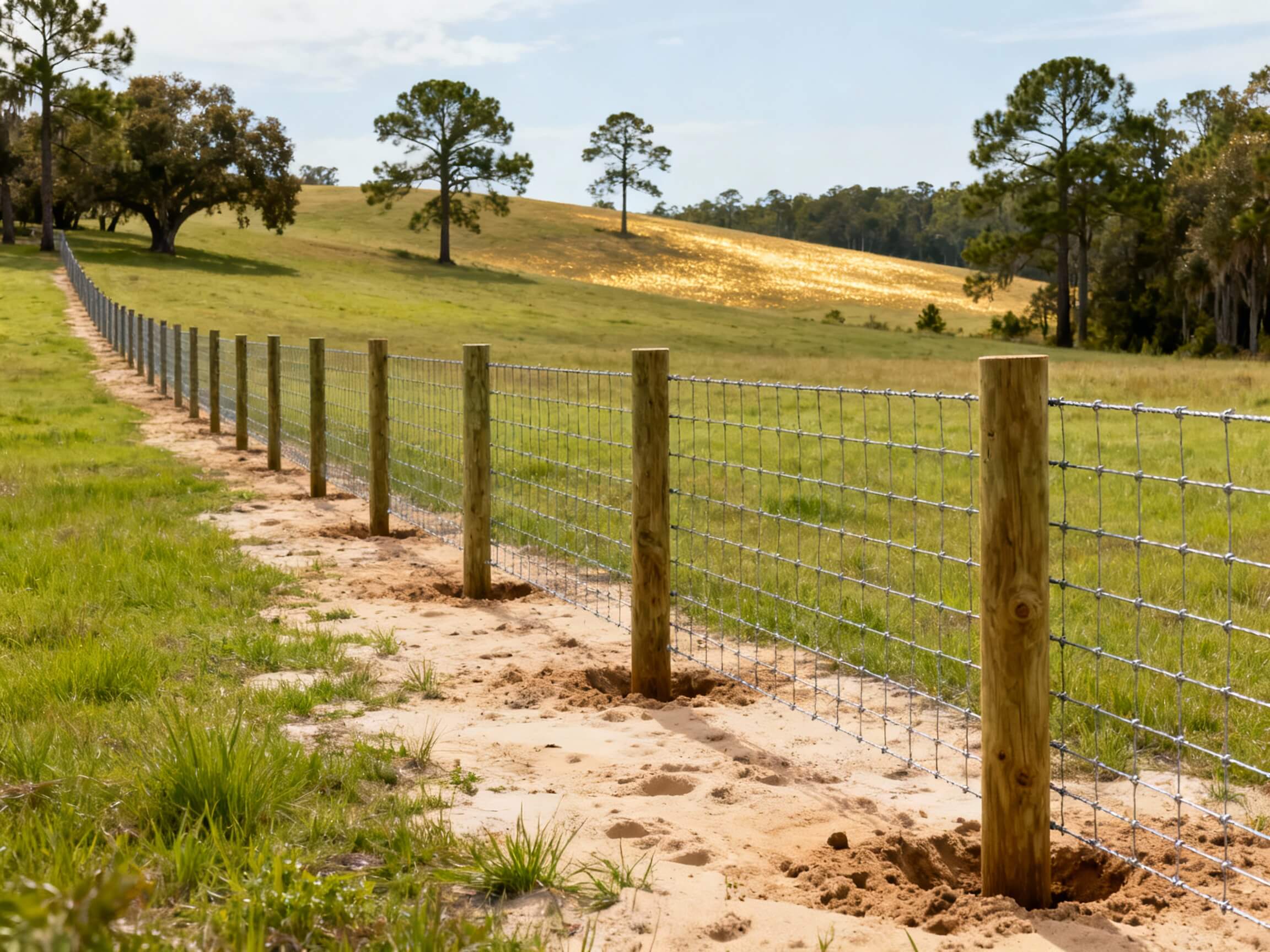
For a durable barrier, many ranchers turn to woven wire. Fixed-knot woven wire features a solid knot that locks vertical and horizontal wires together, creating a rigid and incredibly strong fence. This makes it an ideal choice for high-pressure areas like feedlots or pens where cattle might push against the fence line.
Conversely, hinge-joint wire uses a flexible knot that allows the fence to "hinge" under pressure. This flexibility makes it an excellent choice for the rolling hills and uneven terrain often found across South Georgia and the Florida Panhandle. The fence can conform to the landscape without creating stress points that could lead to failure.
Fencing for All Livestock: Sheep and Goat Fence Considerations
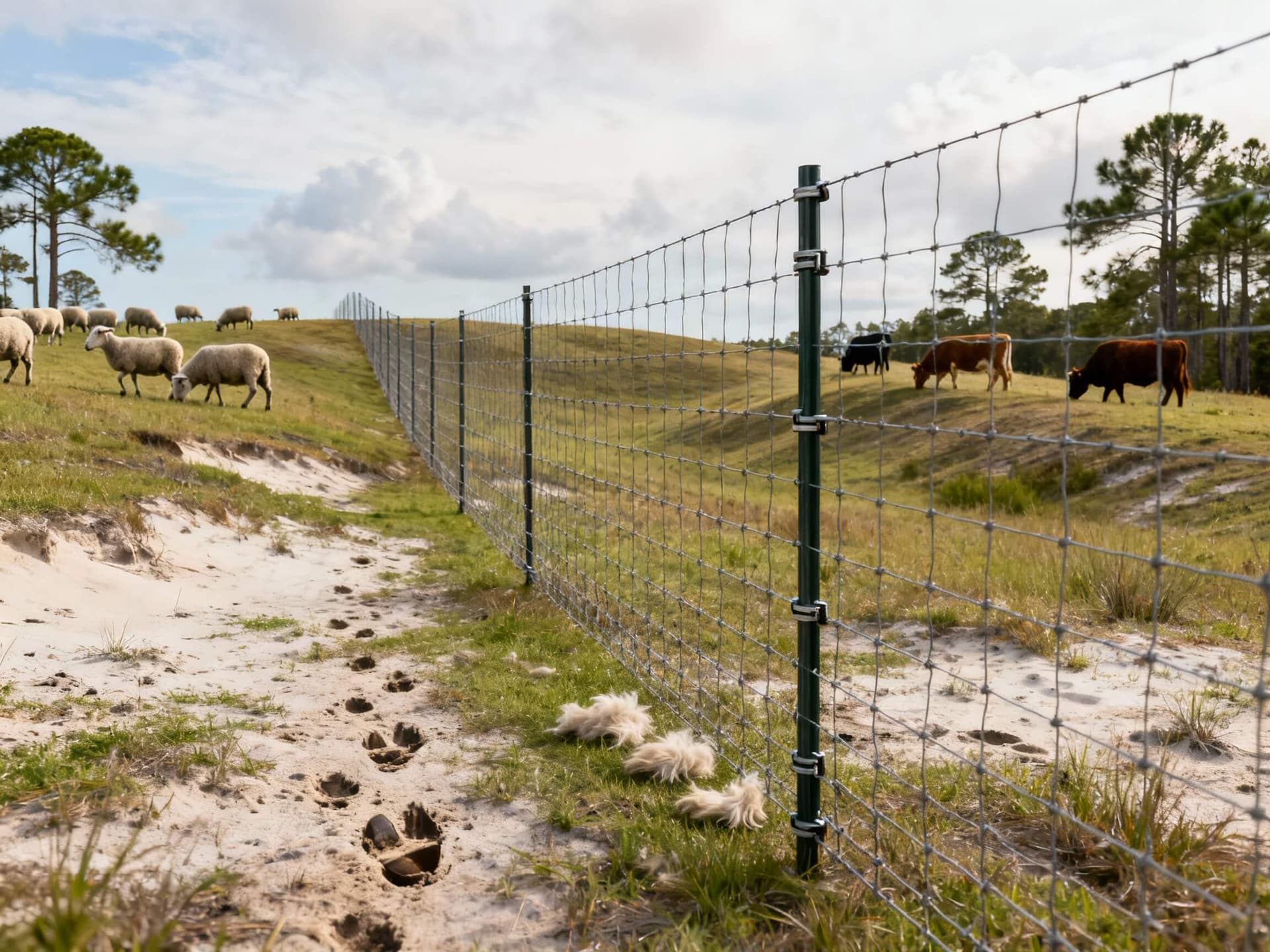
If your operation includes smaller livestock, a standard cattle fence roll won't be enough. Goats and sheep can easily squeeze through the wider openings of cattle fencing. For multi-species pastures, you need a specialized sheep and goat fence with tighter spacing.
Look for woven wire with smaller 3-inch or 6-inch vertical stays. A 4 foot goat fence is typically a sufficient height and, when combined with this tighter spacing, provides a secure enclosure. This prevents smaller animals from escaping and protects them from predators that might try to get in.
Key Factors for Fencing in Florida, Alabama, and Georgia
Fencing in the Southeast isn't a one-size-fits-all job. Our unique climate, soil, and wildlife pressures demand specific solutions to ensure your fence is both effective and long-lasting. A fence built for another part of the country will quickly fail here.
Beating the Elements: Fencing for Sandy Soil and Hurricane Resilience
The sandy soil common throughout Florida presents a major challenge for fence stability. Standard post depths are simply not enough. To create a lasting foundation, posts must be set much deeper—typically 30 to 42 inches—to prevent them from leaning or uprooting during heavy rain or high winds.
Hurricane resilience is another key consideration. Solid panel fences act like sails in a storm, leading to catastrophic failure. High-tensile wire and woven livestock fence rolls are naturally wind-permeable, allowing powerful gusts to pass through and dramatically reducing the load on your posts and braces.
Protecting Your Operation: Fencing for Wildlife and Predator Control
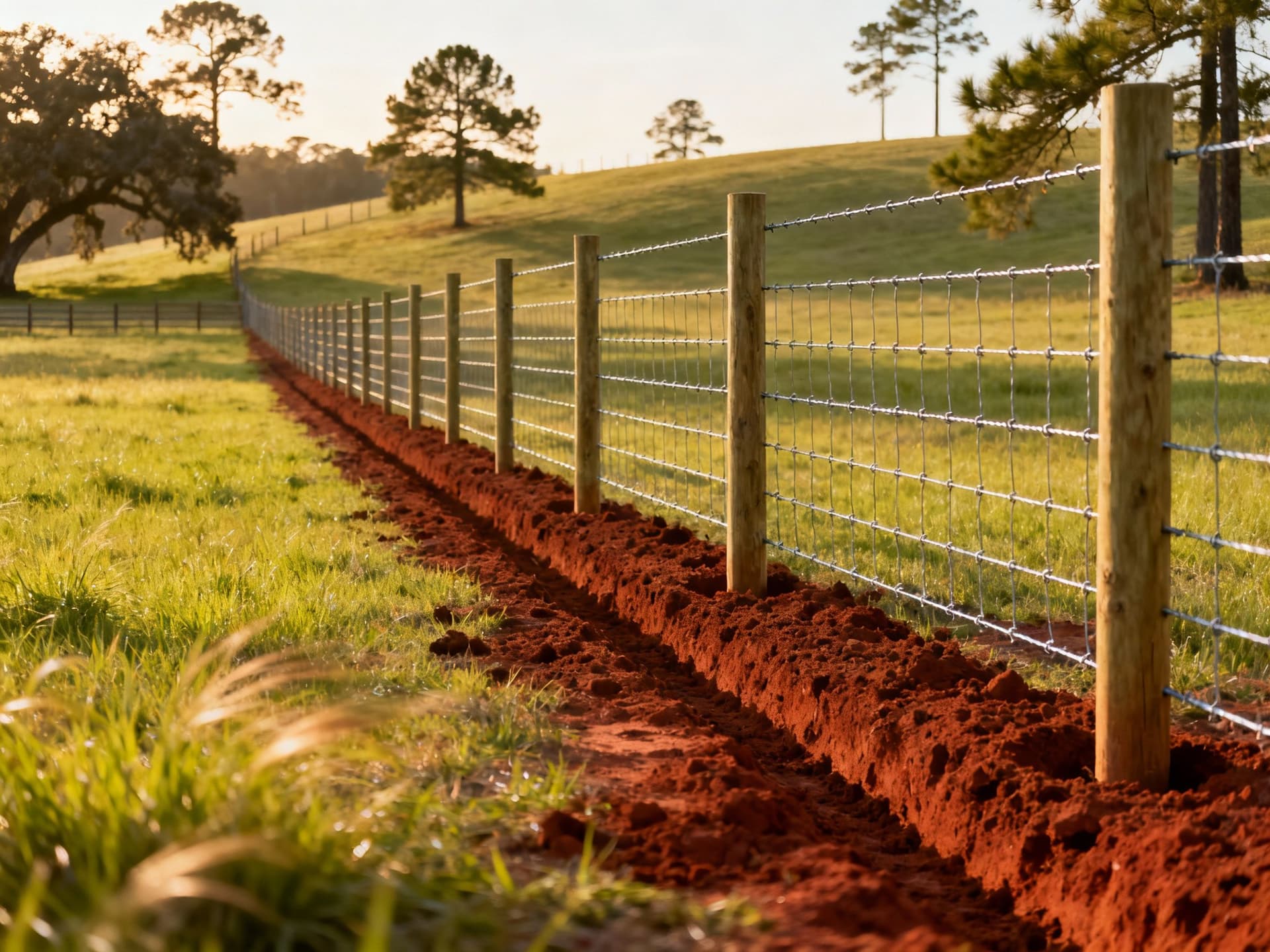
Protecting your pastures and livestock from wildlife is a constant battle. Feral hogs, a significant problem in areas like South Alabama, can destroy a pasture overnight. Research shows that specialized welded wire panels at least 34 inches high are required to effectively exclude adult hogs Texas A&M Natural Resources Institute.
Integrating these exclusion panels in targeted, high-risk areas is a smart strategy. You can protect valuable crops or calving pastures without needing to install expensive hog-proof fencing around your entire property. This hybrid approach balances cost with effective protection.
The Hub-and-Spoke Model for Large Acreage Management
For managing large properties, the "hub-and-spoke" system is a highly efficient design. This model uses a secure central corral or working area as a "hub." Permanent fence lines then radiate outwards like "spokes," dividing the property into large, manageable paddocks.
This layout simplifies rotating livestock and allows for more effective grazing management. The perimeter is typically secured with a strong woven livestock fence rolls, while interior cross-fences can be built with cost-effective high-tensile wire, creating a robust and practical system for any large-scale ranch.
Planning Your Fence Project: Costs & Best Practices
Need Help?
Get expert fencing advice and free quotes. Our team is ready to help with your project.
Available Mon-Fri, 8am-6pm EST
A new fence is a major capital investment, and planning is key to getting it right. Understanding costs, recognizing the value of professional work, and exploring financial assistance can help you build the right fence for your budget and needs.
Budgeting for Your Fence: 2026 Cost Estimates
The cost of a new fence depends on materials, terrain, and labor. As of 2026, professionally installed high-tensile fencing typically falls between $1.60 and $4.50 per linear foot HomeAdvisor. While this is a significant investment, the longevity and low maintenance of these systems provide excellent long-term value.
Farmers in Alabama should also take note of Act 2024-169. This legislation provides a state sales tax exemption on many agricultural fencing materials, offering a direct way to reduce project costs and make your budget go further.
Why Professional Installation is a Non-Negotiable
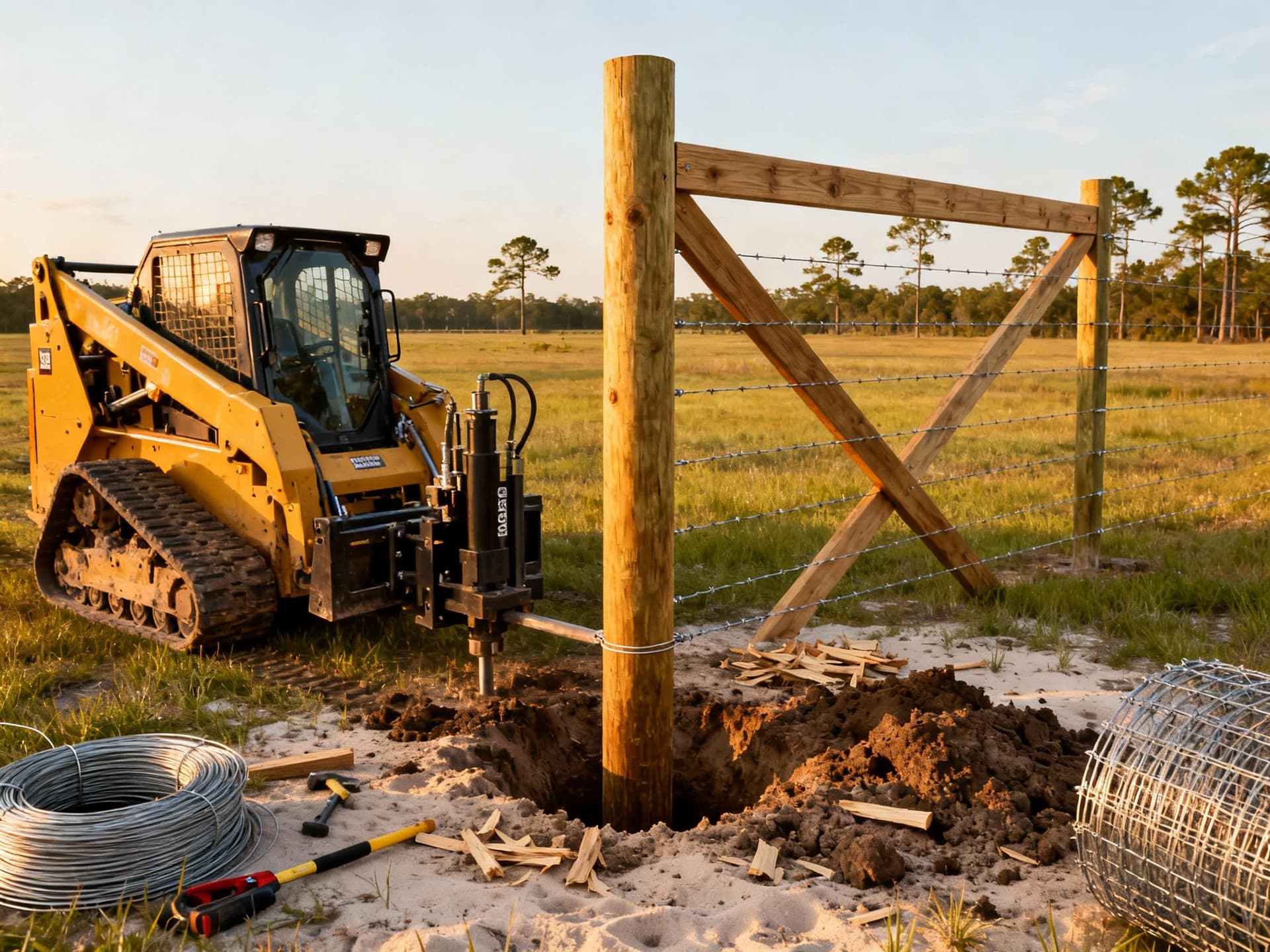
The best materials in the world will fail if not installed correctly. Professional installers use proven techniques and specialized equipment that DIYers simply don't have. For example, using a skid-steer post driver ensures every post is set to the proper depth and is perfectly stable.
Furthermore, experts know how to build robust H-braces for corners and end posts. These structures are engineered to handle the immense tension of a high-tensile fence line, preventing the corner post failure that dooms so many amateur fence projects. Paying for expert installation means you pay once for a fence that lasts for decades.
Funding Your Project with NRCS and Local Programs
Don't overlook financial assistance programs that can make a quality fence more affordable. The Natural Resources Conservation Service (NRCS) offers the Environmental Quality Incentives Program (EQIP), which provides technical and financial cost-share assistance for conservation-minded projects, including livestock fencing NRCS.
These programs can help offset a significant portion of the cost of installing cross-fencing for rotational grazing systems that improve soil health and water quality. Contacting your local NRCS office is a crucial step in planning your project's budget.
Investing in the correct, professionally installed cattle fence roll is not an expense but a long-term asset. It is the foundation of a secure and efficient operation, protecting your livestock and enhancing your farm's value for decades to come. By choosing the right materials and expert installation, you ensure your fence can withstand the unique challenges of ranching in the Southeast.
For a fencing partner who understands the unique challenges of ranching in the Southeast, contact Bomann Fencing for an expert consultation on your Florida Panhandle property.
Frequently Asked Questions
What is the most durable type of cattle fence roll for a large farm?
For large farms, a high-tensile woven wire cattle fence roll with Class 3 galvanization is the most durable option. The high-tensile strength resists sagging and impact, while the heavy galvanization protects against rust and corrosion common in humid climates.
How deep should fence posts be set in the sandy soil of the Florida Panhandle?
In the loose, sandy soil of the Florida Panhandle, fence posts must be set much deeper than standard. A depth of at least 30 to 42 inches is recommended to ensure the posts remain stable and can withstand high winds and pressure without leaning or failing.
Are there grants available in South Georgia or South Alabama for farm fencing?
Yes, farmers in South Georgia and South Alabama can often get financial assistance through the USDA's NRCS EQIP program. This program provides cost-share support for fencing projects that are part of a larger conservation plan, such as implementing rotational grazing.
Can I use a standard cattle fence roll for goats and sheep?
No, a standard cattle fence roll has openings that are too large and will not contain smaller animals. To fence goats and sheep, you need a specialized woven wire, often called a sheep and goat fence, with smaller vertical spacing (typically 3" or 6") to prevent them from escaping.
What is an H-brace and why is it important for a livestock fence rolls?
An H-brace is a critical support structure built at corners, ends, and gates of a fence line. It consists of multiple posts linked together to distribute the immense tension from tight livestock fence rolls. Without properly built H-braces, the tension would cause corner posts to lean, sag, or pull out of the ground, leading to fence failure.
Share this article
Related Posts
Need Help?
Get expert fencing advice and free quotes. Our team is ready to help with your project.
Available Mon-Fri, 8am-6pm EST
Related Posts
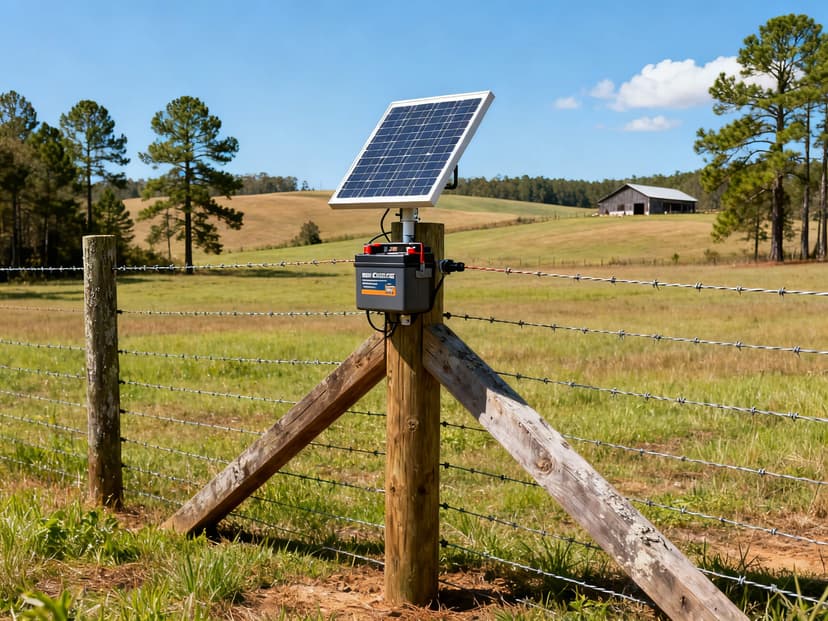
Solar Electric Fence Energizer: Cost vs. Long-Term Value
The Financial Breakdown: Upfront Investment vs. Lifetime Value Choosing the right energizer starts with understanding th...

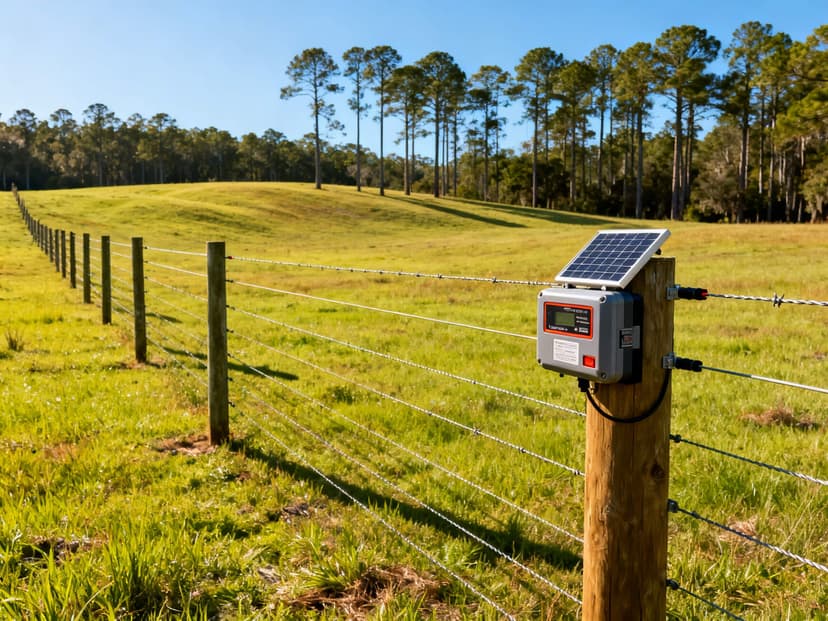
How to Choose the Best Electric Fence Charger for Cattle
Matching Energizer Power to Your Cattle & Fence Your electric fence is a psychological barrier, not a physical one. To b...
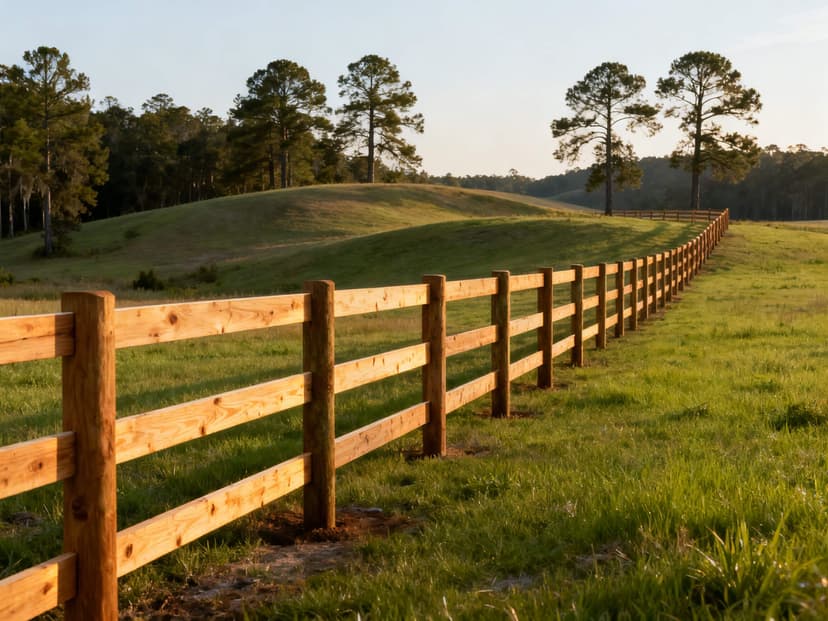
Wood Farm Fence: Pine vs. Cedar for Your Southeast Farm
The Main Contenders: A Look at Two Popular Fencing Woods When you're building a fence to protect your livestock and defi...
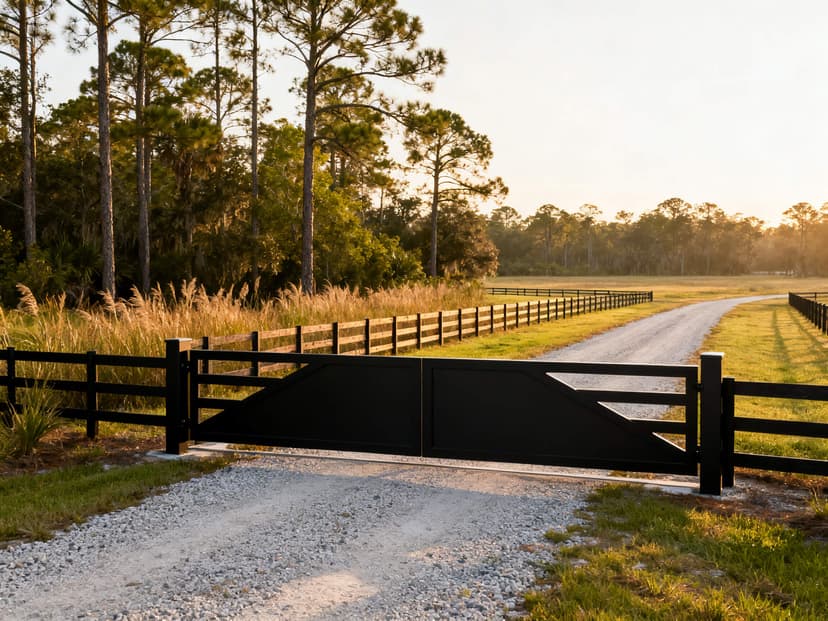
Farm Driveway Gate: A Guide to Planning & Automation
Key Planning Decisions for Your Farm Entrance Gates Manually opening and closing a heavy farm gate wastes valuable time ...
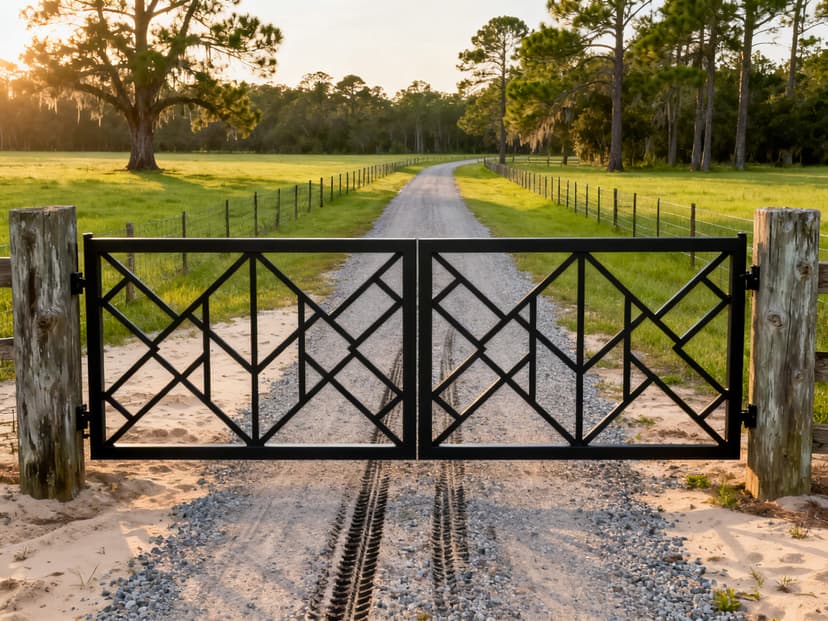
Custom Farm Gates: A Farmer’s Design & Planning Guide
A Farmer’s Guide to Designing and Planning Custom Farm Gates Choosing the right custom farm gate is a major decision for...