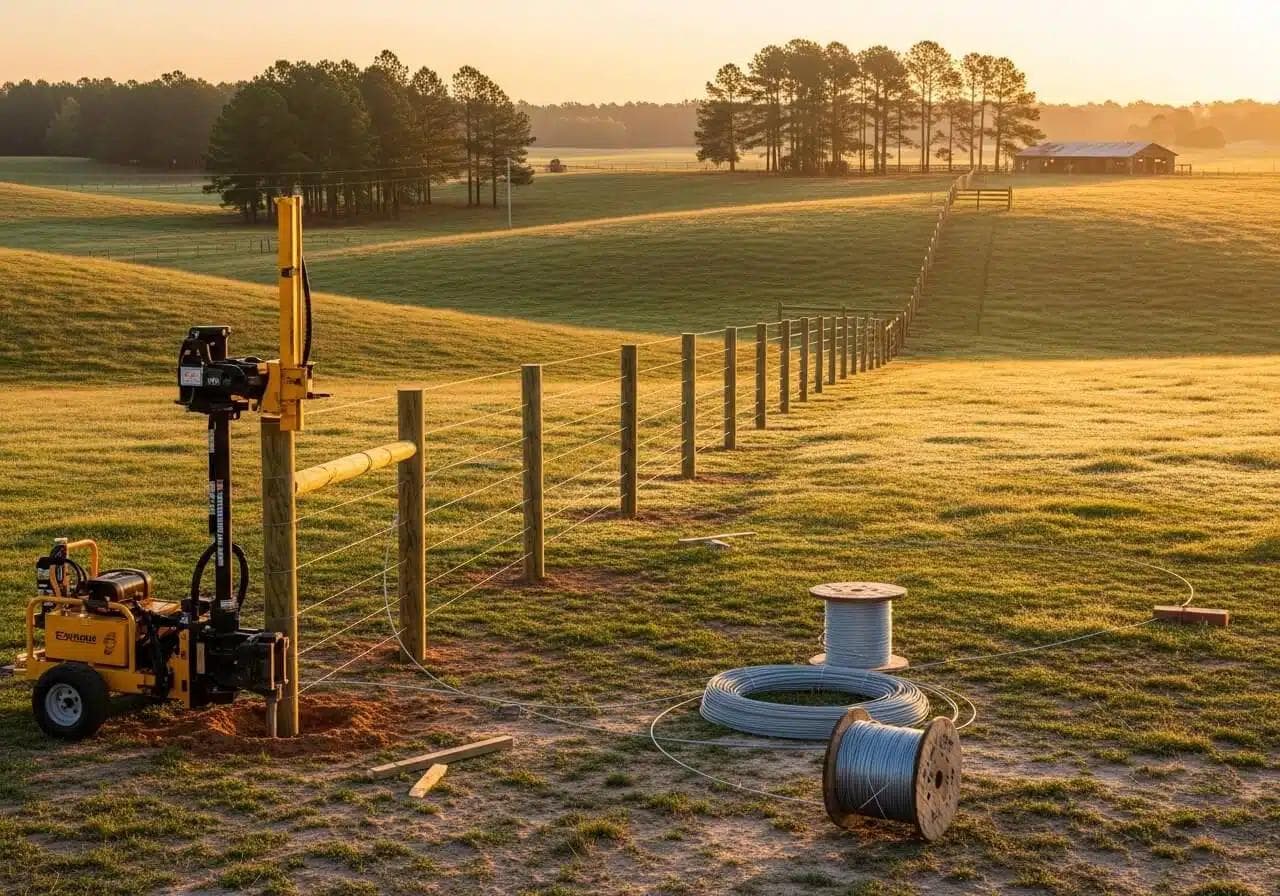
Pro Guide to a High Tensile Fence Setup That Lasts

A well-built high tensile fence setup starts with proper planning, High Tensile Fence Investment not just digging holes. When installed correctly, this type of fencing provides decades of reliable service, protecting your livestock, securing your land, and saving money long-term. Below, we break down the essential steps to build a fence that holds up in the Southeast’s climate.
Plan Before You Build
Map the Fence Line and Select Smart Materials
Walk your planned fence line and identify low areas, slopes, and gate locations. This ensures your layout fits your terrain and livestock flow.
Material selection is equally important. In humid climates like the Florida Panhandle, use Class 3 galvanized wire for rust resistance and .60 CCA pressure-treated wood posts for durability. Cutting corners on materials leads to early repairs.
For best results, many property owners work with professional high tensile fence installation experts to ensure the posts, bracing, and wire tension are set up to last decades.
Set Posts Deep for Southeastern Soils
In sandy or soft soils common in South Georgia and coastal Alabama, shallow posts won’t last. Drive posts at least 2.5 to 3 feet deep using a hydraulic or skid-steer post driver. This professional method ensures consistent, stable results that won’t loosen with time.
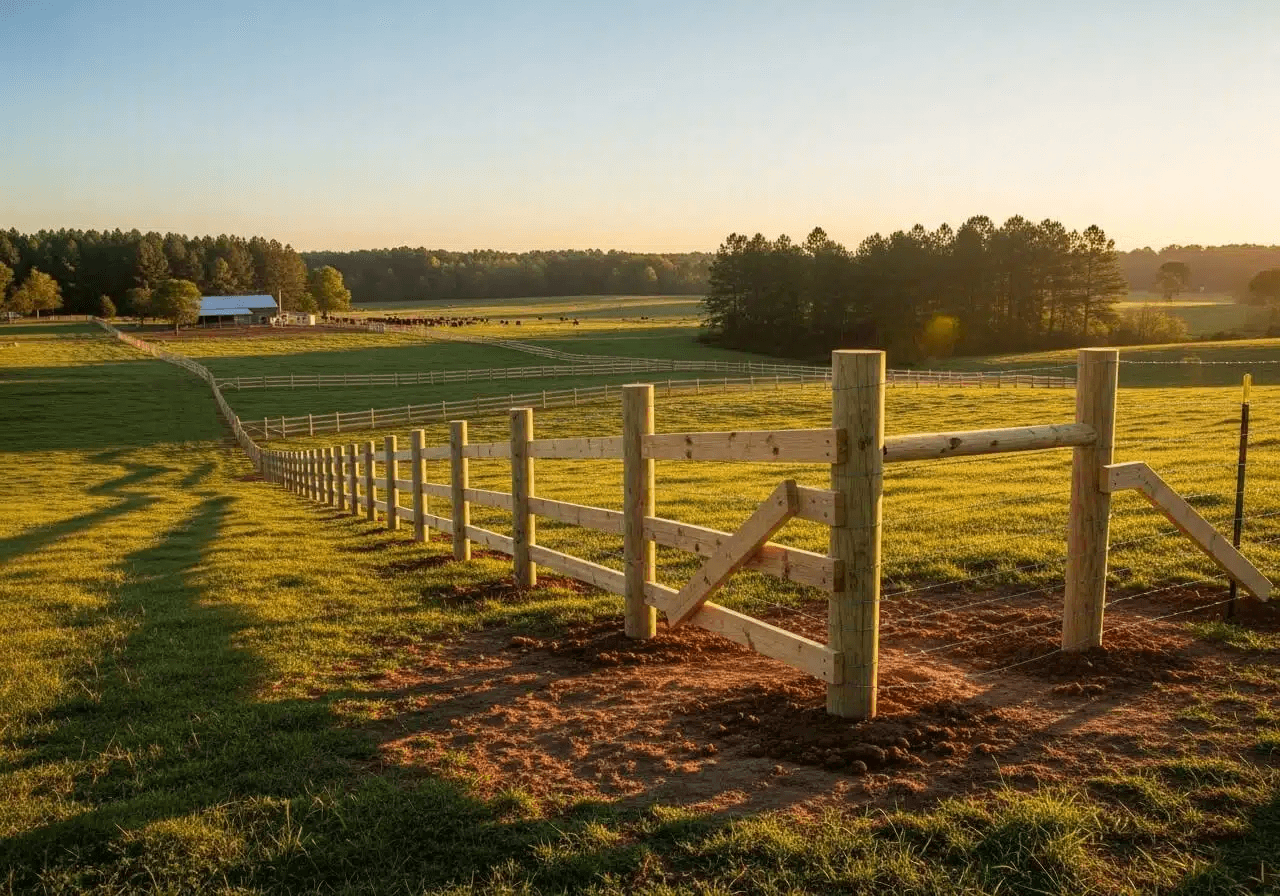
Essential Tools for High Tensile Fence Installation
To safely and efficiently install a high tensile fence, use the right equipment:
- Hydraulic post driver
- Spinning jenny for unspooling wire
- Wire stretcher or come-along
- Crimping tools with sleeves
- Safety gear (gloves, eye protection)
These tools improve build quality and help prevent safety issues during tensioning.
Build Strong Corners First
Need Help?
Get expert fencing advice and free quotes. Our team is ready to help with your project.
Available Mon-Fri, 8am-6pm EST
Why H-Braces Are Essential
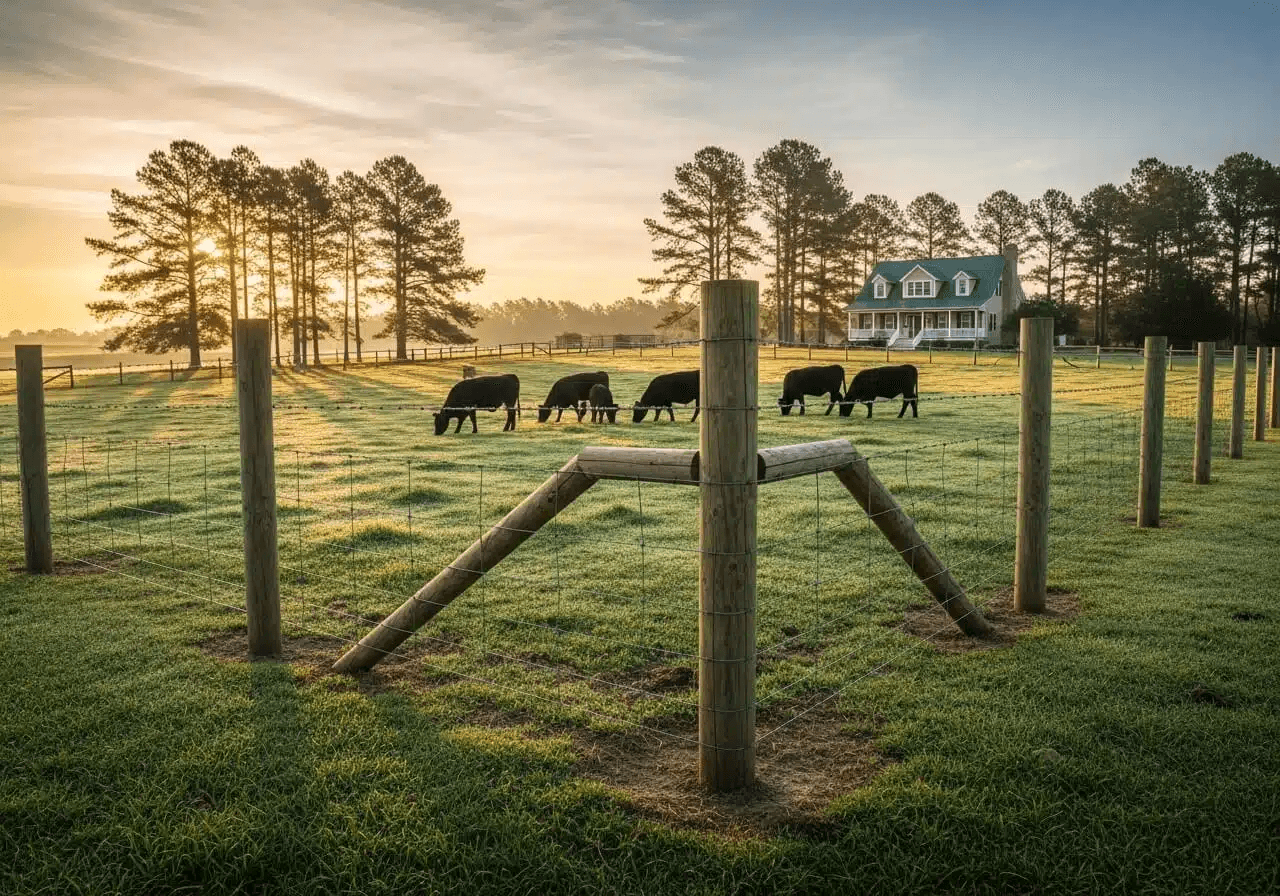
Corner and end posts bear the full load of tensioned wire corner assembly details. Without solid bracing, they will lean or pull out. The H-brace system forms a rigid triangle that channels force into the ground, keeping your fence tight from Andalusia, AL to Quincy, FL.
If your property includes livestock or large acreage, consider pairing your setup with farm fence installation for consistent stability and coverage across all sections of your property.
How to Build a Proper Single H-Brace
For straight fence runs under 660 feet, a single H-brace is ideal Bekaert Fencing, 2025
- Corner post: 8 feet long, buried 4 feet deep
- Brace post: 8 feet long, buried 3 feet deep, 8 feet from the corner post
- Horizontal brace: connects both posts at the top
- Diagonal 12.5-gauge wire: runs from bottom of corner post to top of brace post, tightened with a twitch stick or tensioner
When to Use a Double H-Brace
For longer runs, sharp corners, or fences with more than six strands, build a double H-brace. It adds another brace post and diagonal wire, reinforcing tension points. This setup is common on large ranches near Albany, GA or Ocala, FL.
Run and Tension the Wire
Use a Spinning Jenny to Unspool
Always unspool wire with a spinning jenny to prevent dangerous kinks or tangles. As you pull wire along the fence line, secure it to posts using quality insulators. This helps avoid electrical shorts, especially in humid climates from Mobile to Marianna.
Achieve Proper Tension
Use a come-along or fence tensioner to pull the wire tight, about 150 to 250 pounds of tension per strand. Once tight, crimp the wire with sleeves to lock it in place.
Install in-line strainers every half mile to maintain tension over time. In regions with wide temperature swings, tension springs help the fence flex with expansion and contraction, reducing long-term stress on posts.
Adding a low strand of electric fence installation can improve containment and deter wildlife without affecting the strength of your main high tensile lines
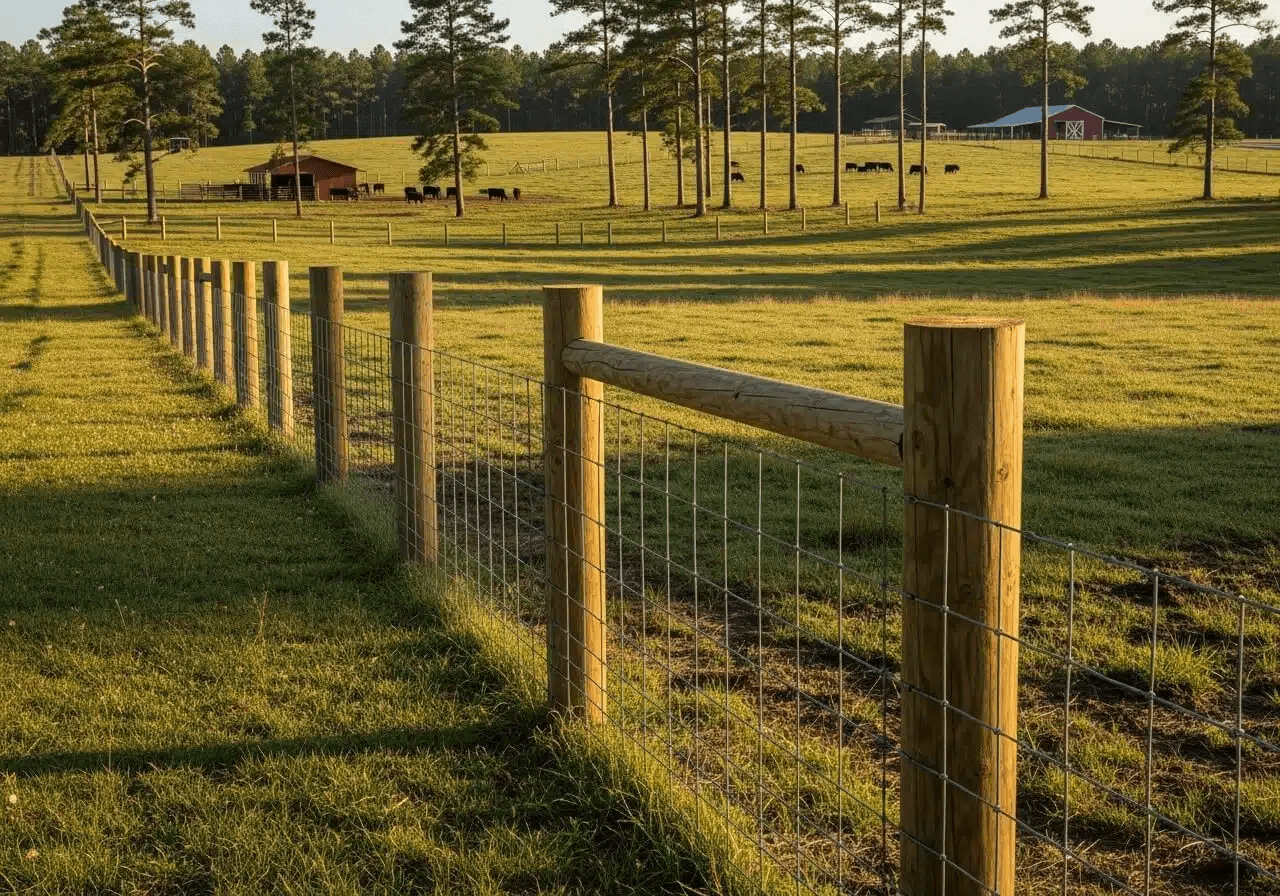
Frequently Asked Questions
How deep should posts be in sandy Florida soil?
Set line posts at least 3 feet deep to prevent leaning or shifting under pressure.
What makes a high tensile corner assembly strong?
A rigid H-brace with deep-set posts, a horizontal brace, and a tensioned diagonal wire absorbs and distributes stress, keeping the fence upright.
What’s the cost of a professional high tensile fence setup?
Prices typically range from $2 to $7 per linear foot depending on materials, terrain, and complexity HomeGuide, 2025.
Is high tensile wire safe for horses?
Yes, with modifications. Use coated high tensile wire or a top sight board to improve visibility and prevent injuries. Complete Fence Investment Guide
Share this article
Related Posts

Need Help?
Get expert fencing advice and free quotes. Our team is ready to help with your project.
Available Mon-Fri, 8am-6pm EST
Related Posts
Electric Fence Voltage for Cattle: A Farmer's Guide
Voltage vs. Joules: Getting the Power Right for Your Livestock When you're protecting your livelihood, getting your elec...

Solar Electric Fence Energizer: Cost vs. Long-Term Value
The Financial Breakdown: Upfront Investment vs. Lifetime Value Choosing the right energizer starts with understanding th...

How to Install Electric Fence for Cattle: A DIY Guide
Planning Your Fence & Choosing the Right Materials A reliable electric fence begins with a solid plan. Before you buy an...
How to Choose the Best Electric Fence Charger for Cattle
Matching Energizer Power to Your Cattle & Fence Your electric fence is a psychological barrier, not a physical one. To b...
Wood Farm Fence: Pine vs. Cedar for Your Southeast Farm
The Main Contenders: A Look at Two Popular Fencing Woods When you're building a fence to protect your livestock and defi...