Livestock Wire Fence: A Pro's Guide for the Southeast

Planning and Material Selection for the Southeast
A durable livestock wire fence Woven Wire Cattle Fence starts long before the first post is driven. Proper planning and choosing materials suited for the Southeastern climate are crucial for building a fence that lasts for decades. Your choice will depend on the animals you're containing, your property's terrain, and your long-term goals.
Woven Wire vs. High-Tensile: Choosing the Right System
For most farm applications in our region, woven wire and high-tensile are the two primary choices. High-tensile fencing is a good option for containing calm cattle over large, open pastures, as it uses fewer posts. However, it requires electricity to be effective and is less suitable for smaller, more determined animals.
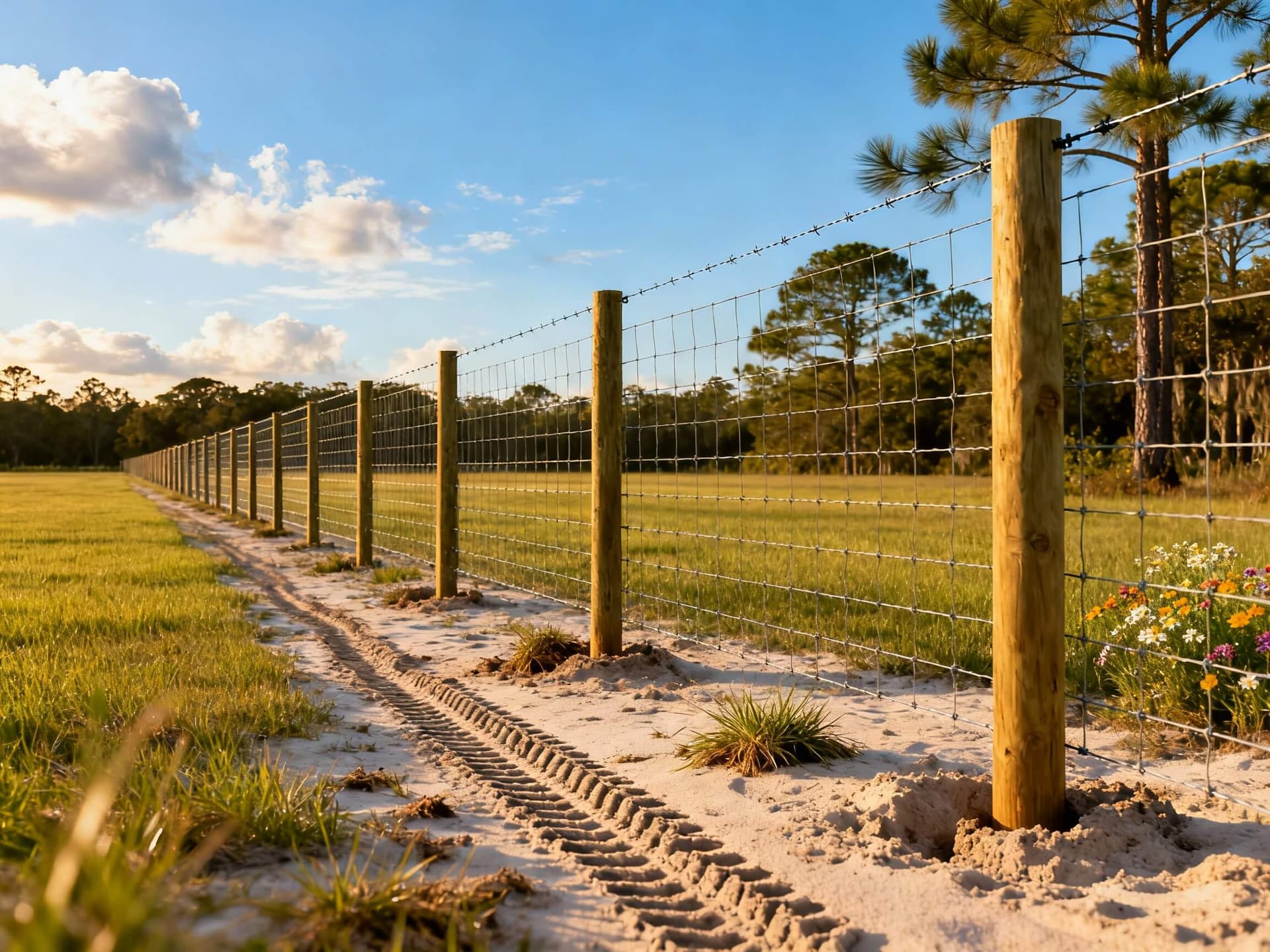
Woven wire, on the other hand, provides a strong physical barrier that doesn't rely on power. This makes a woven wire cattle fence an excellent choice for security, and it is the superior option for containing goats, sheep, and hogs. Its knot construction and tight spacing create a formidable enclosure that protects your livestock from predators and prevents escapes.
Why Class 3 Galvanization is Essential in the Florida Panhandle
The high humidity and salt-laden air, especially in coastal areas like the Florida Panhandle, can destroy a fence in just a few years. Rust is the number one enemy of any steel fence. This is why material quality is not a corner you can afford to cut.
Standard Class 1 galvanized wire may only last 2 to 11 years in this harsh environment. We exclusively use Class 3 galvanized livestock wire, which has a much thicker zinc coating. This superior protection ensures your fence will last 13 to 30 years before rust becomes a concern Louis E. Page, Inc., providing real long-term value and peace of mind.
Designing for Your Animals: From 4ft Goat Fence to Cattle Barriers
A fence is only effective if it’s designed for the specific animals it needs to contain. For a sheep wire fence or a 4ft goat fence, the mesh size is critical. We recommend a 4x4 inch mesh, which is small enough to prevent goats and sheep from getting their heads stuck—a common and often fatal problem with larger 6-inch spacing Red Brand.
A 4ft goat fence is the minimum height standard, but an extra strand of electric wire at the top can deter climbing. For larger animals like cattle and horses, the fence height and wire gauge must be increased to handle their size and strength. Every fence we build is tailored to the unique pressures and behaviors of your livestock.
The Foundation: Expert Post-Setting Techniques
The strength of any livestock wire fence lies in its foundation. The posts, especially the corner assemblies, bear the incredible tension of the stretched wire. Without a rock-solid foundation, even the best wire will eventually sag and fail.
Building Indestructible Corner and Brace Assemblies (H-Braces)
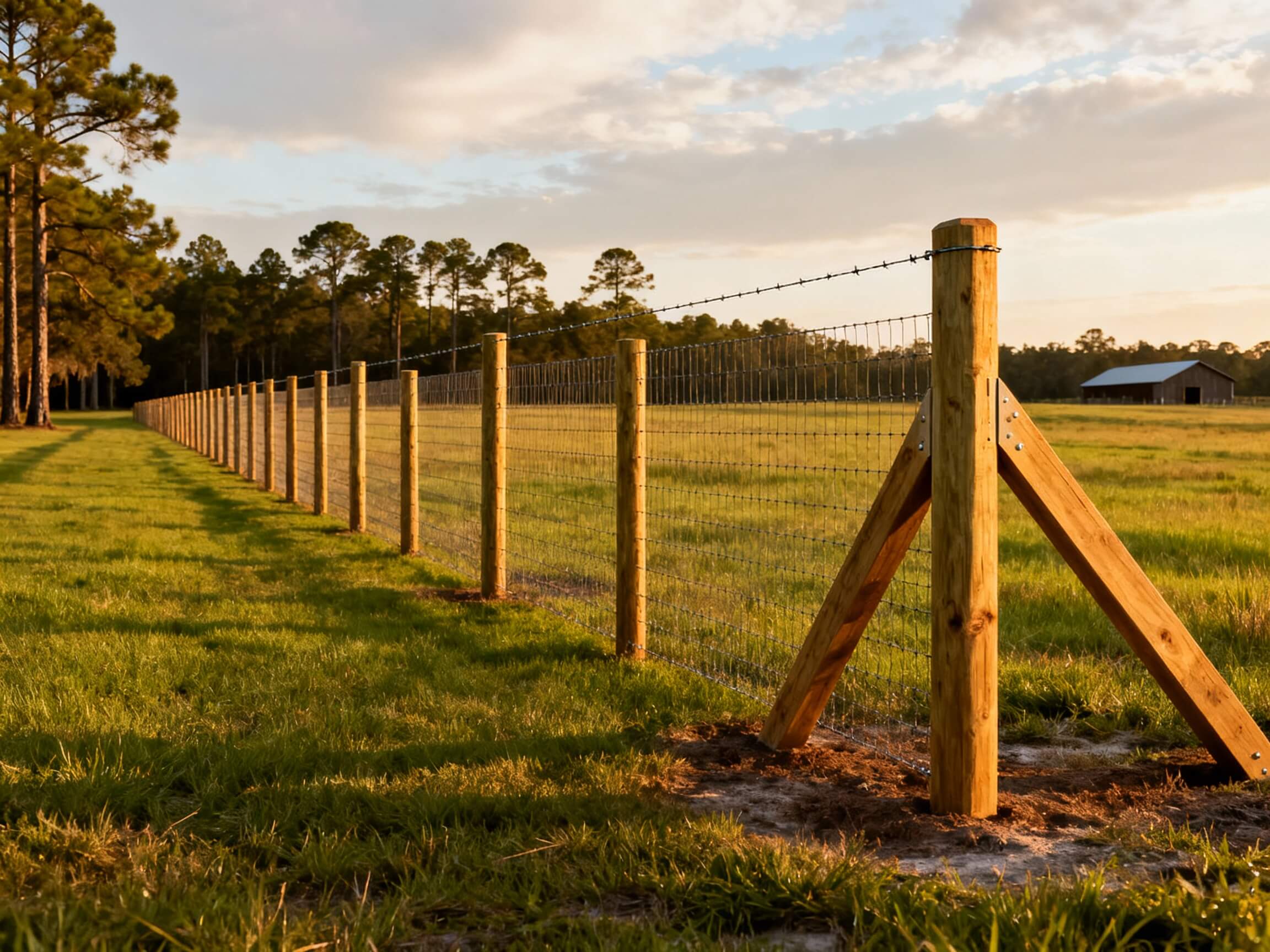
The corners and ends of a fence do 90% of the work. We build H-brace assemblies using larger, 6-to-8-inch diameter pressure-treated posts. These posts act as anchors for the entire fence line, absorbing hundreds of pounds of pressure from the tensioned wire without moving an inch.
A properly constructed H-brace is the signature of a professional installation. It ensures your fence remains tight and upright through decades of seasonal changes and pressure from livestock.
Correct Post Depth and Spacing for Southern Soils
Generic advice on post depth often fails in the unique soils of our region. The sandy or wet ground common in South Georgia and Florida requires a more robust approach. We set our corner posts at least 3.5 feet deep to provide the necessary stability.
For line posts holding the woven wire, we recommend a spacing of 8 to 12 feet Bekaert Fencing. This provides excellent support without adding unnecessary material costs. Setting posts at the correct depth and Woven Wire Cattle Fence Guide
Share this article
Related Posts
Need Help?
Get expert fencing advice and free quotes. Our team is ready to help with your project.
Available Mon-Fri, 8am-6pm EST
Related Posts
Solar Electric Fence Energizer: Cost vs. Long-Term Value
The Financial Breakdown: Upfront Investment vs. Lifetime Value Choosing the right energizer starts with understanding th...

How to Choose the Best Electric Fence Charger for Cattle
Matching Energizer Power to Your Cattle & Fence Your electric fence is a psychological barrier, not a physical one. To b...
Wood Farm Fence: Pine vs. Cedar for Your Southeast Farm
The Main Contenders: A Look at Two Popular Fencing Woods When you're building a fence to protect your livestock and defi...
Farm Driveway Gate: A Guide to Planning & Automation
Key Planning Decisions for Your Farm Entrance Gates Manually opening and closing a heavy farm gate wastes valuable time ...
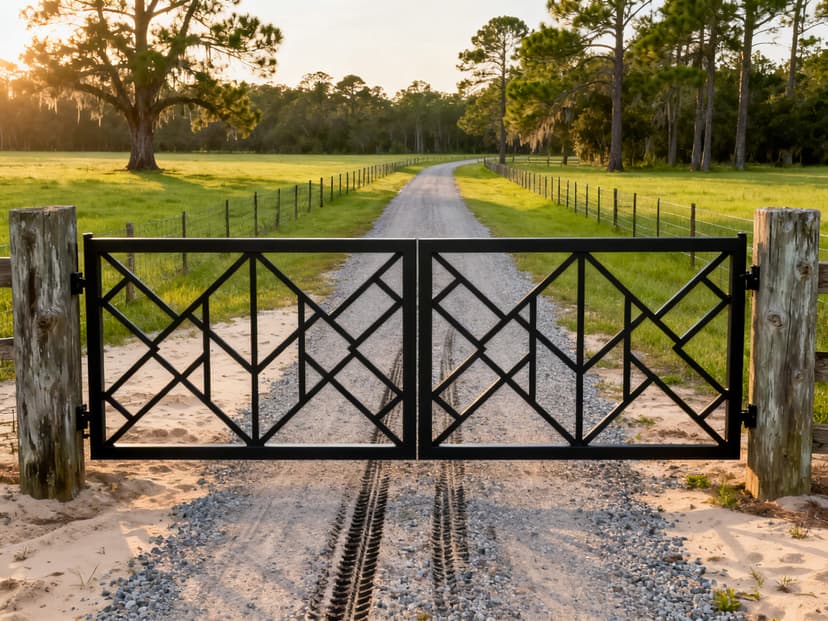
Custom Farm Gates: A Farmer’s Design & Planning Guide
A Farmer’s Guide to Designing and Planning Custom Farm Gates Choosing the right custom farm gate is a major decision for...